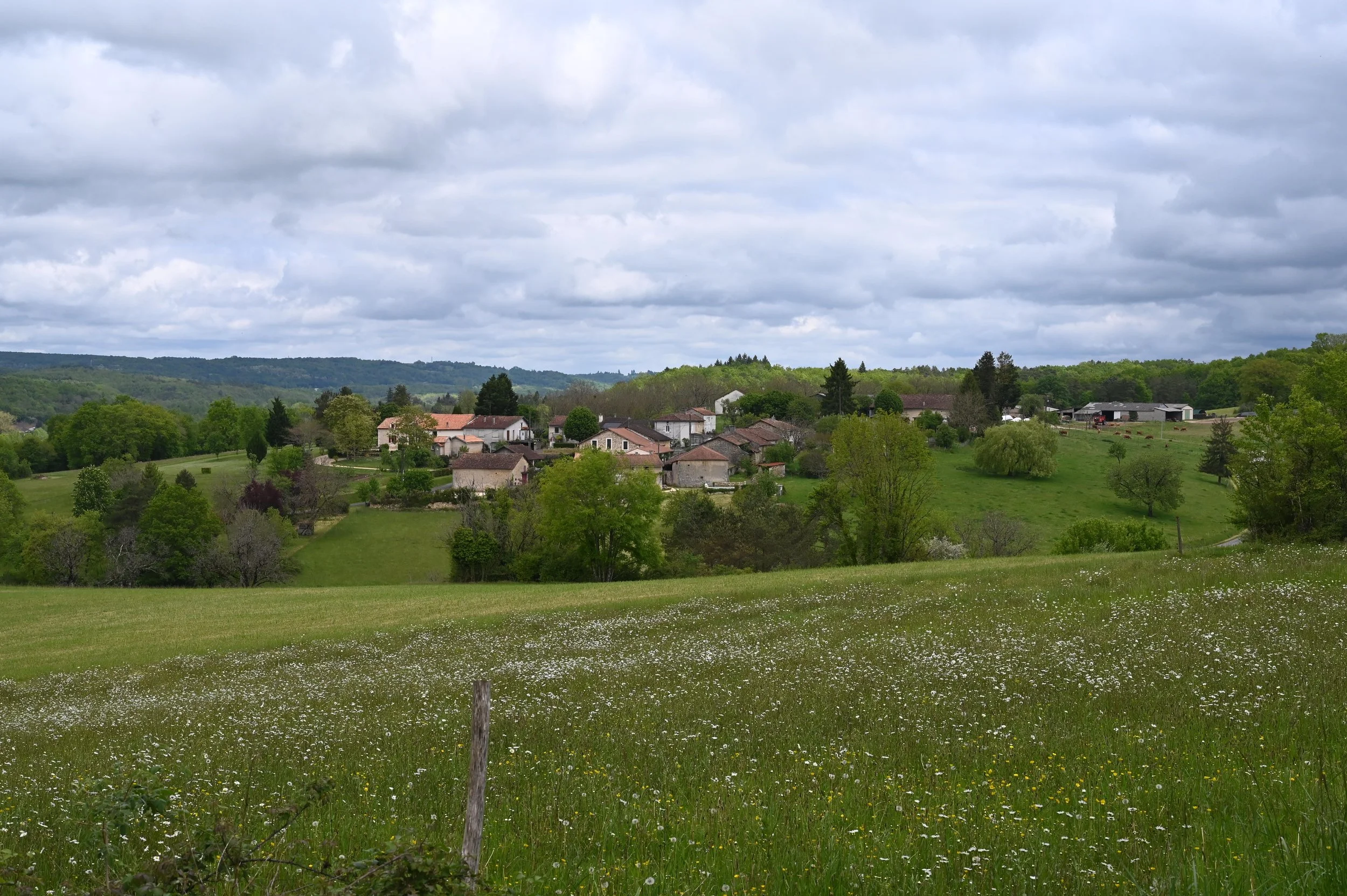
The Dordogne, known historically as the Périgord, is one of the oldest inhabited landscapes in the world. Archaeologists have found evidence of human habitation as far back as 400,000 years ago, and the region's striking limestone hills are full of caves that hide some of the world's most important ancient paintings. The most famous of these is Lascaux, whose depictions of aurochs, horses, deer and other animals date back some 17,000 years.
The area takes its name from the four Celtic Gaulish tribes who originally inhabited it. "Four tribes" in the Gaulish language gave rise to the word "Petrocore," from which the county of Périgord derives its name. The Romans swept through in the first century BC, and their presence is still visible today in the ruins at Périgueux, the regional capital. After Roman rule collapsed, the area passed through Visigoth and then Frankish hands before settling into the medieval world of competing noble dynasties.
The defining political drama of the medieval Dordogne was its position between England and France. After Eleanor of Aquitaine remarried in 1152, the region came under English suzerainty via the Plantagenet Crown, and it oscillated between the two dynasties for more than three hundred years of struggle, until the end of the Hundred Years' War in 1453.
That long conflict left deep marks on the landscape: the extraordinary density of fortified castles, hilltop strongholds and bastide towns visible across the region today are largely a product of those centuries of warfare between French and English-held territories.
The Wars of Religion then ravaged the region until the Edict of Nantes brought the conflict to a close, after which the Dordogne experienced a period of stability and growth for the first time in centuries. Gothic and Renaissance architecture flourished in towns such as Périgueux and Sarlat, and more than 1,200 châteaux were constructed across the countryside by the French nobility.
The modern department of Dordogne was created on 4 March 1790, during the French Revolution, when it was established as one of the original 83 departments of the new French republic, replacing the old county of Périgord. The 19th and early 20th centuries brought gradual rural depopulation as industrialization drew people toward the cities, but the discovery and excavation of the region's extraordinary prehistoric sites through the 20th century steadily built a thriving tourism economy that continues to define the Dordogne today.
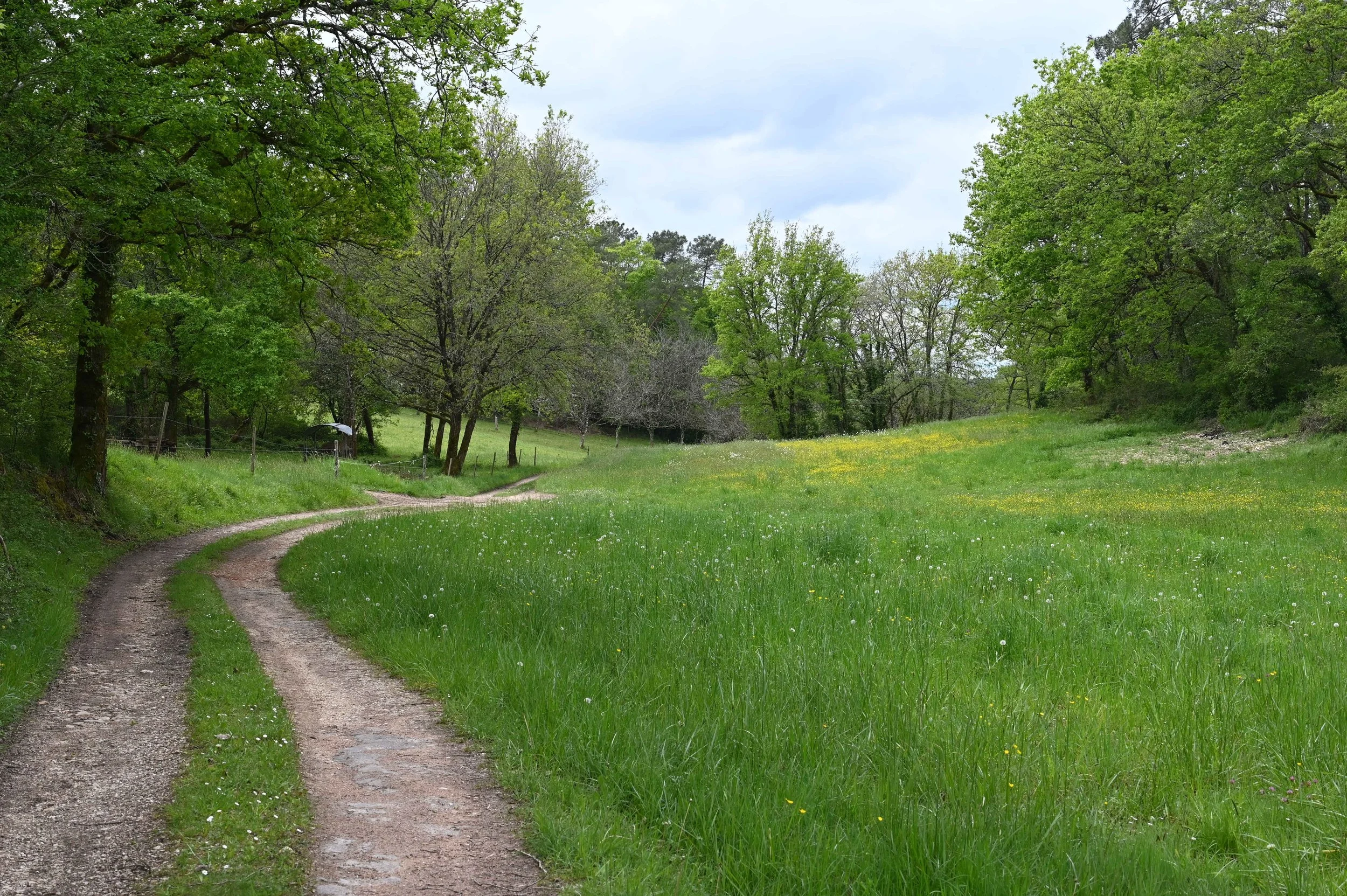
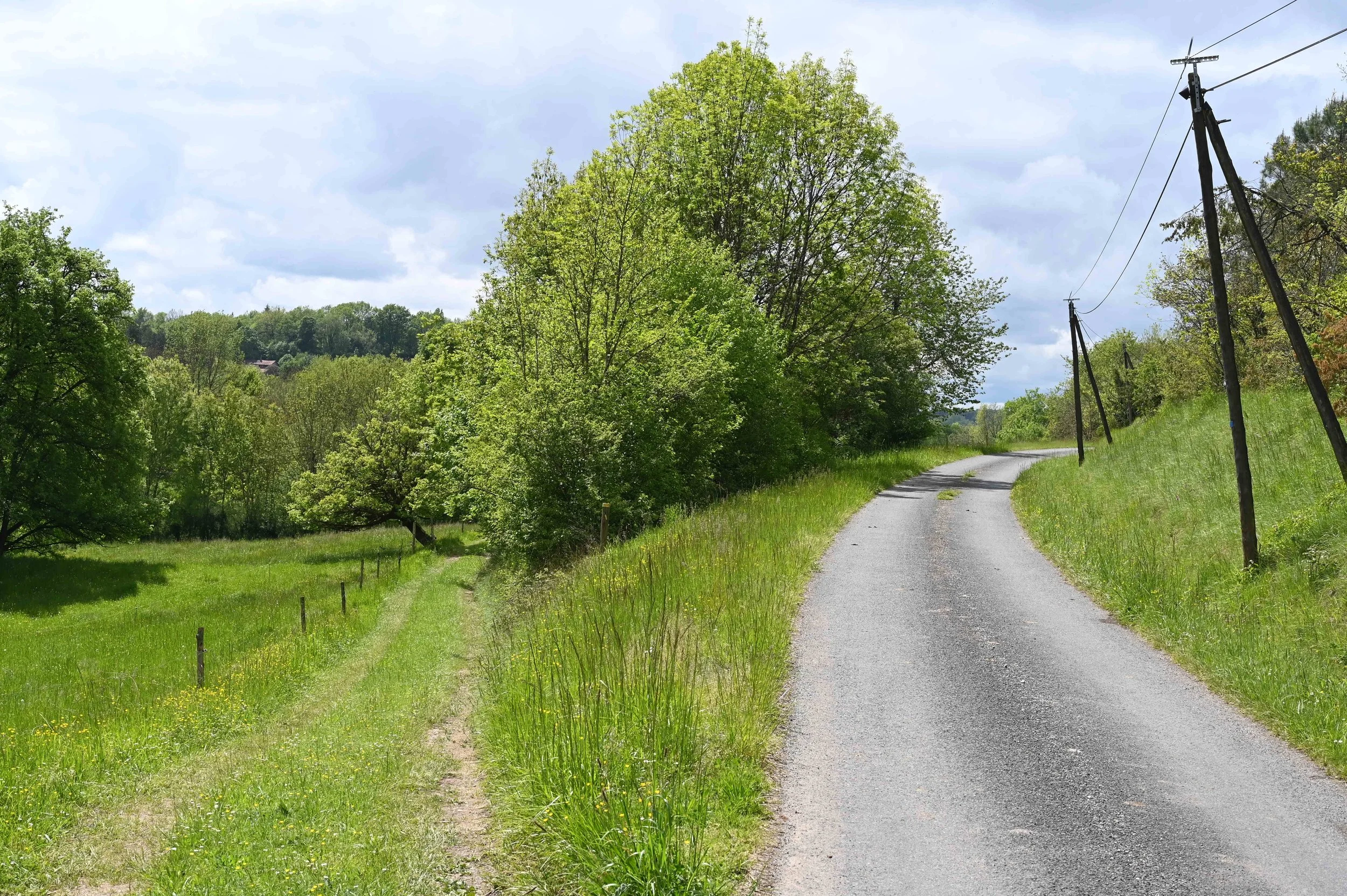
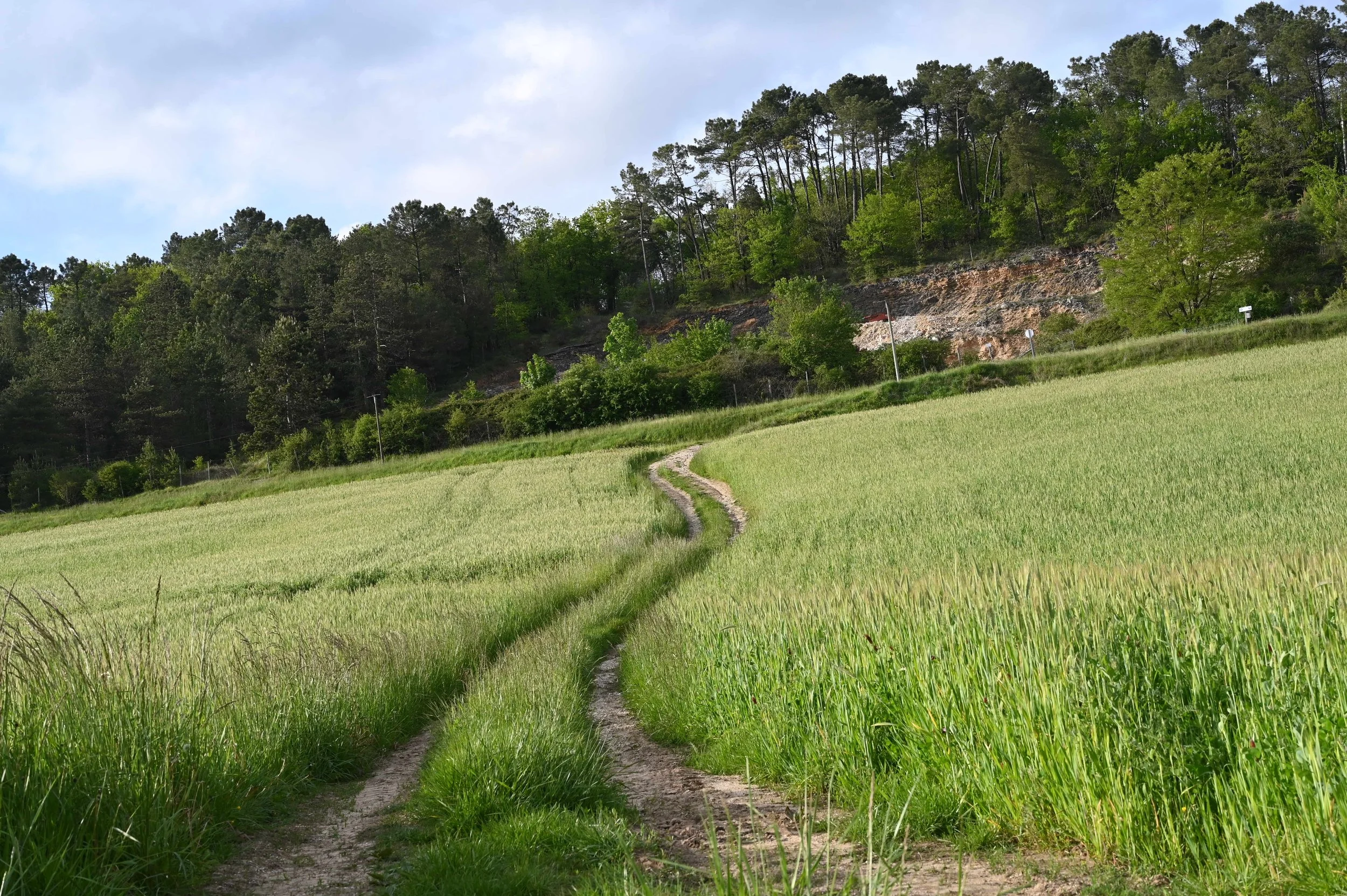

Château de la Renaudie: History and Context
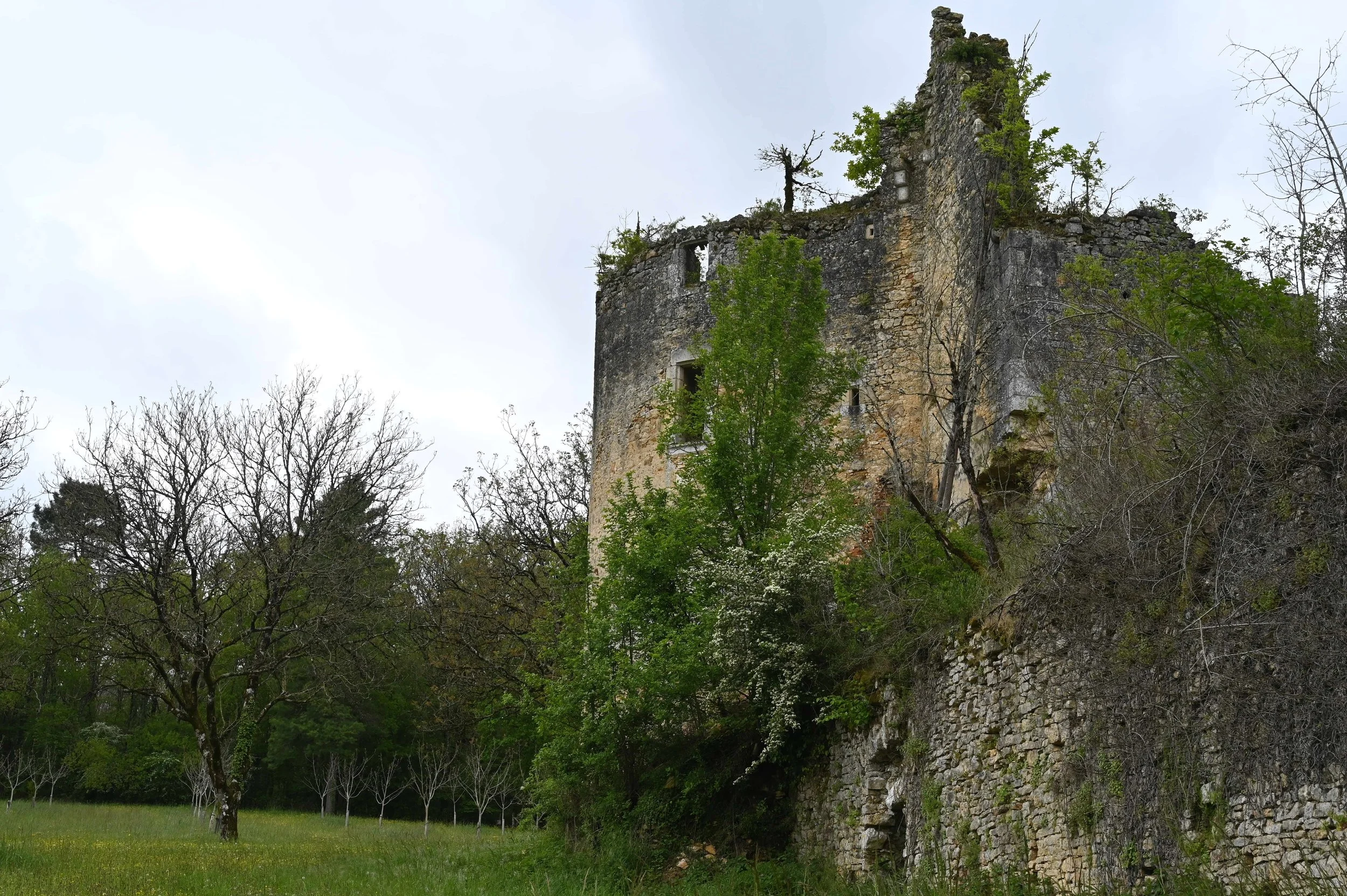
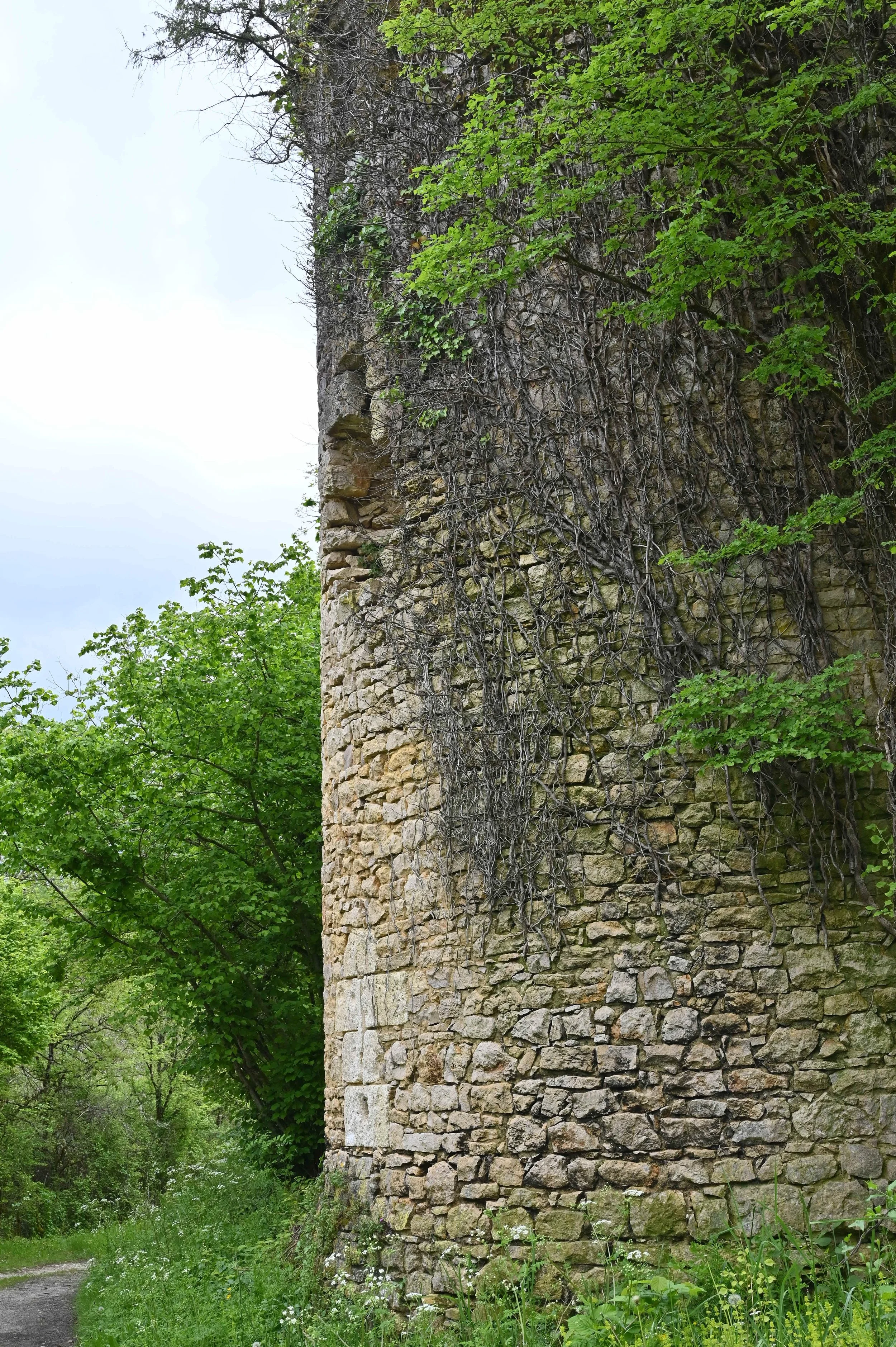
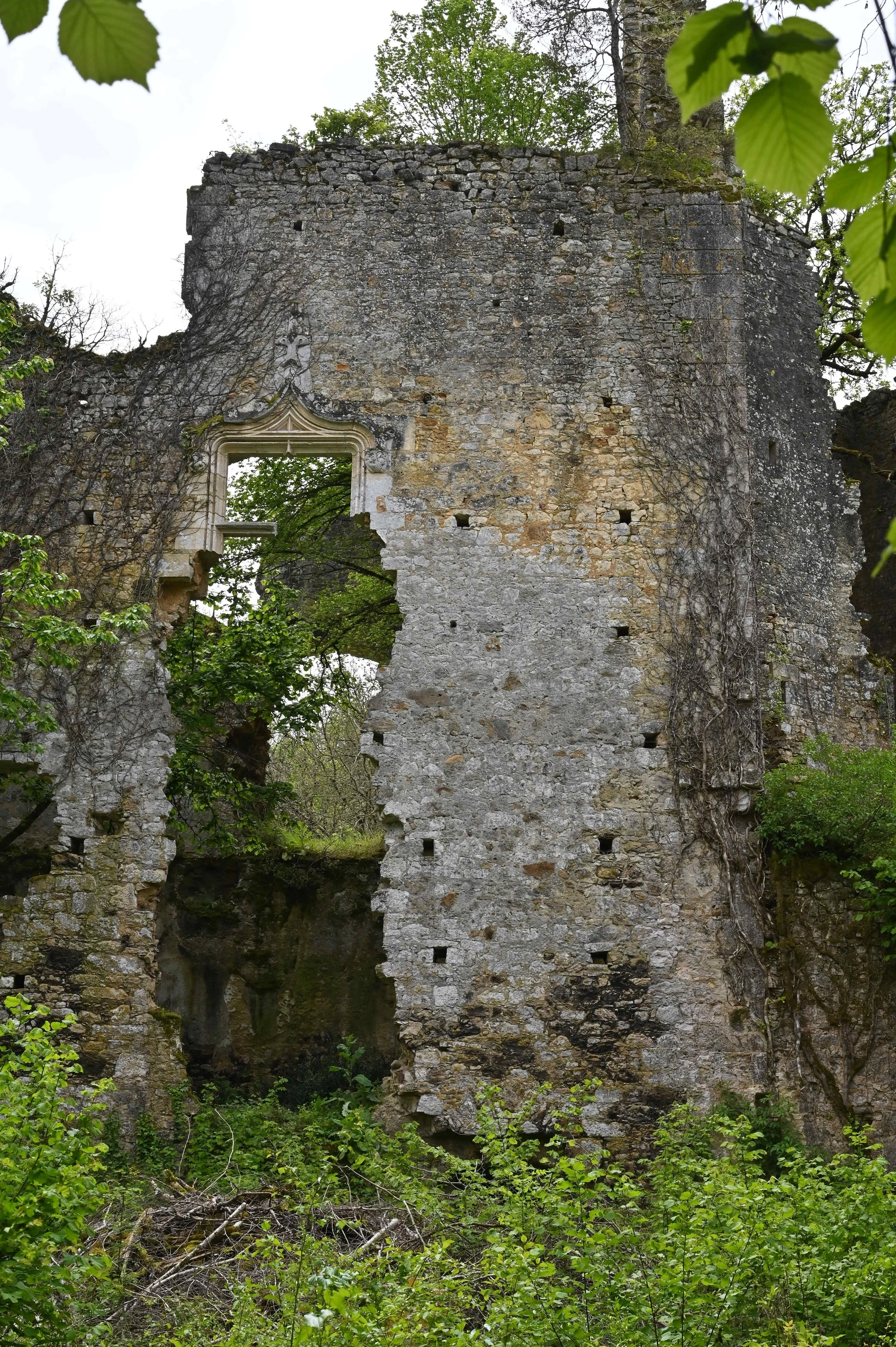
The Château de la Renaudie sits in the commune of Saint-Front-la-Rivière in the Dordogne, about 17 km northeast of Brantôme en Périgord. It was rebuilt in the 15th century on the foundations of a 13th-century structure that had been destroyed during the Hundred Years' War. At its peak, the estate consisted of a main building flanked by four towers of unequal size, and its plan was characteristic of Périgordin castle design.
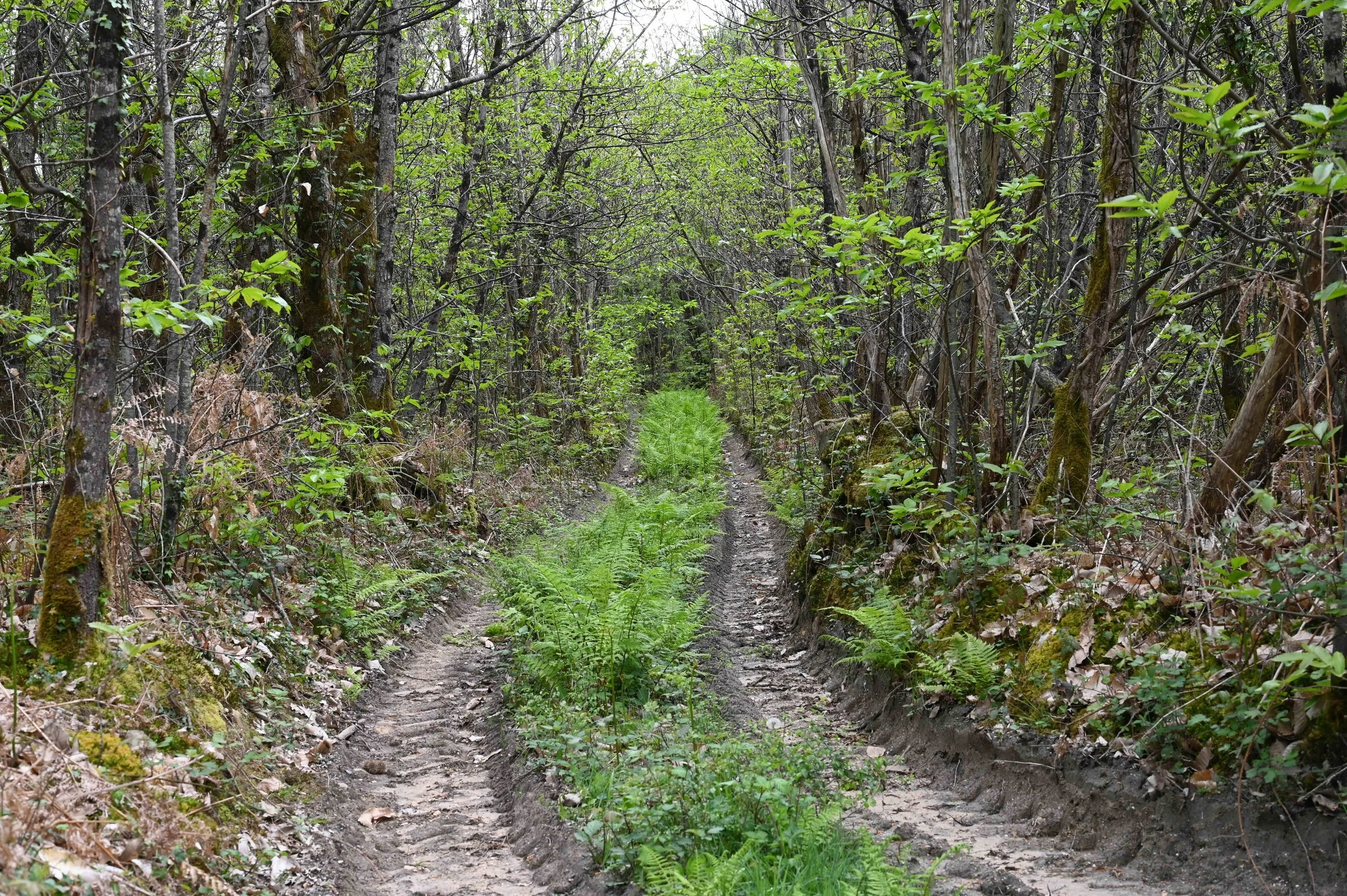
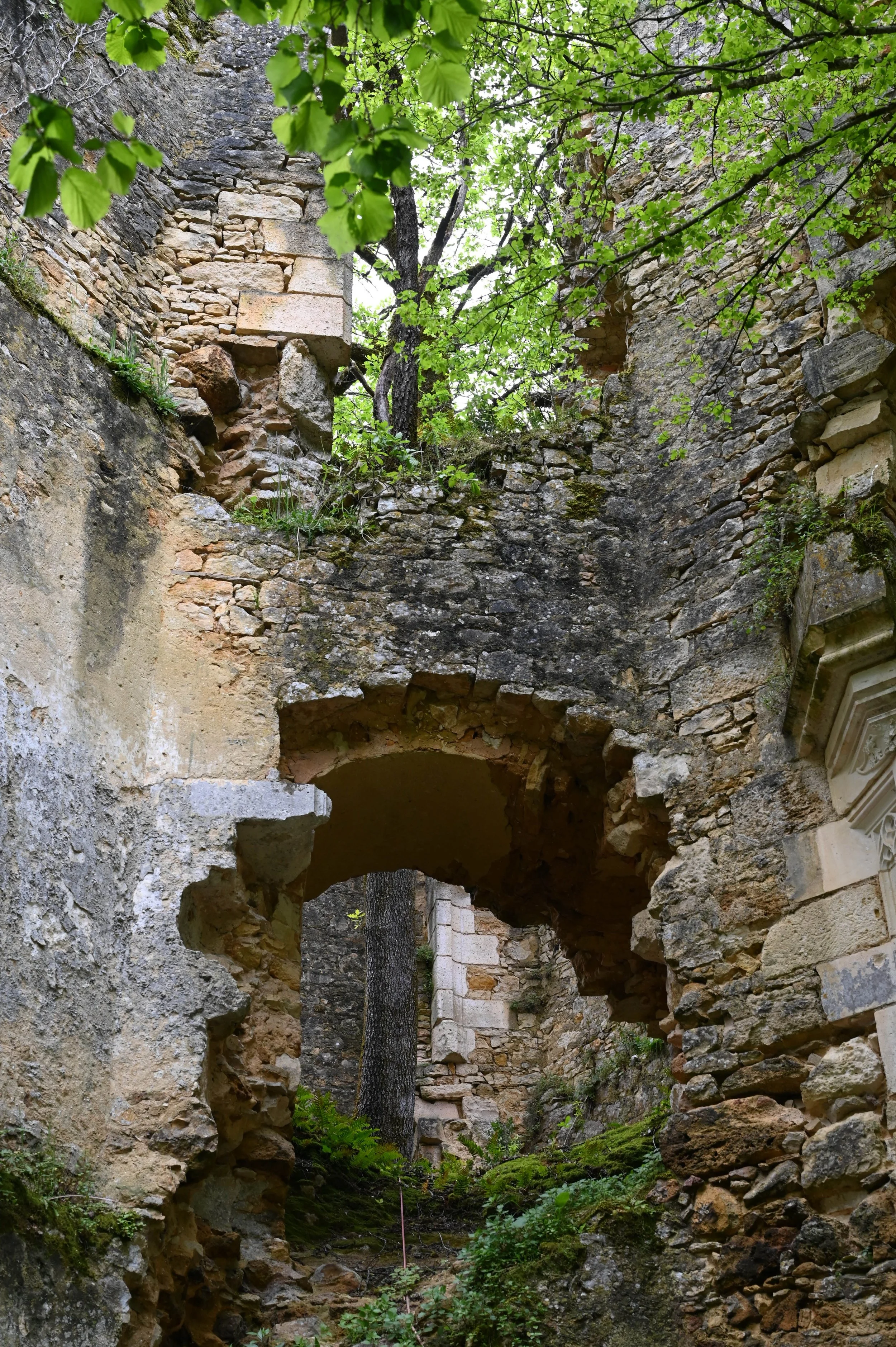
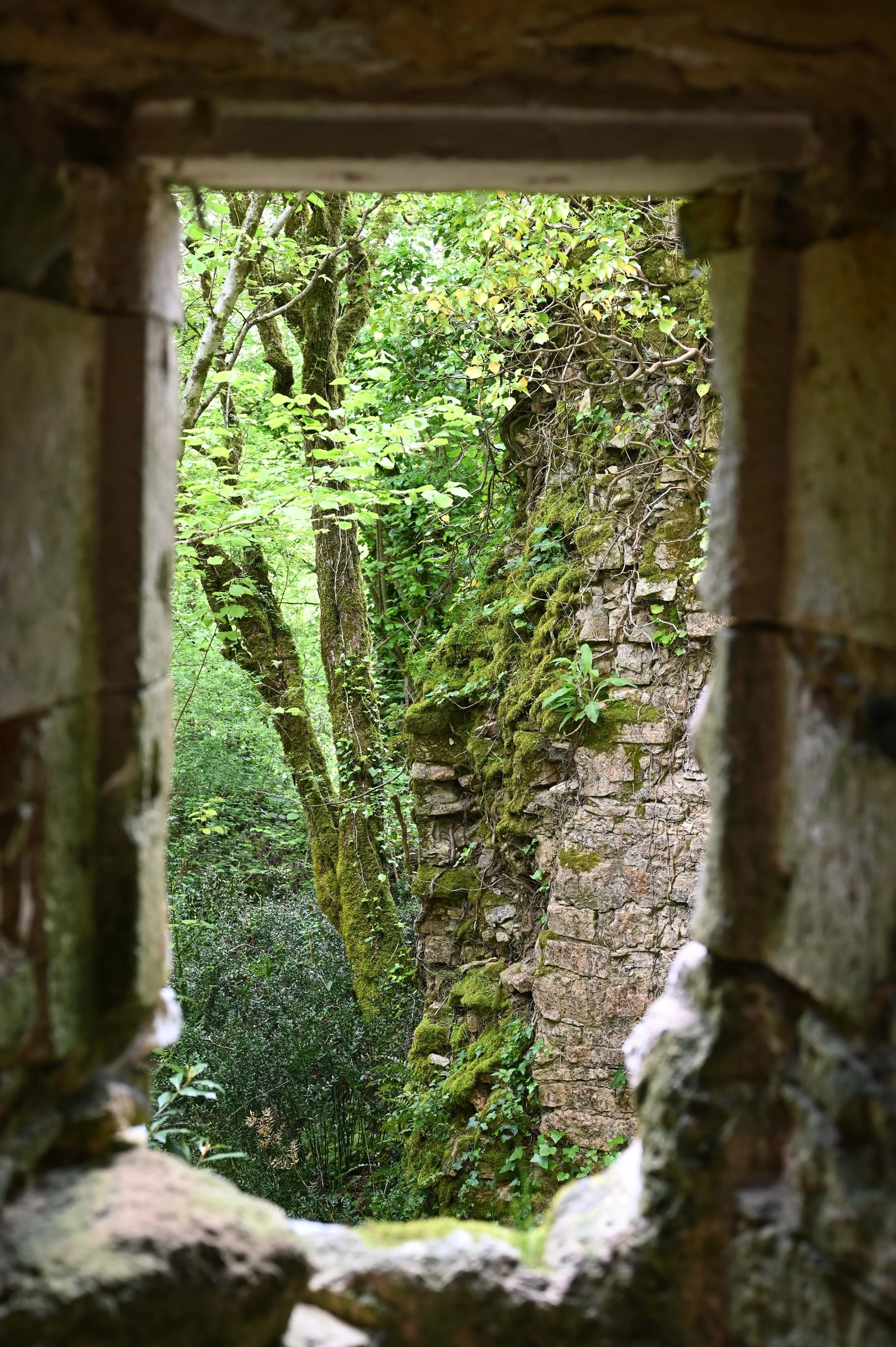
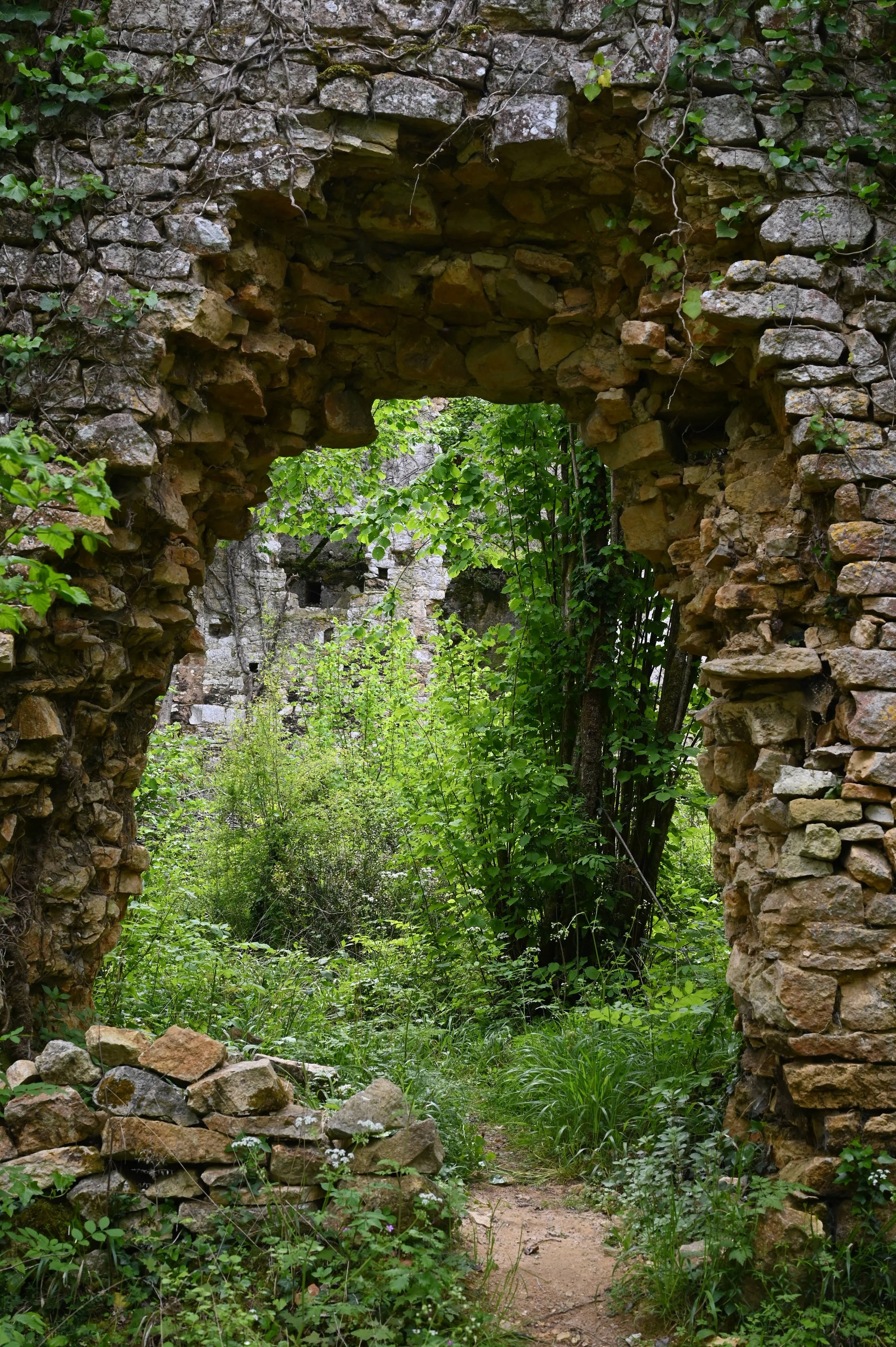
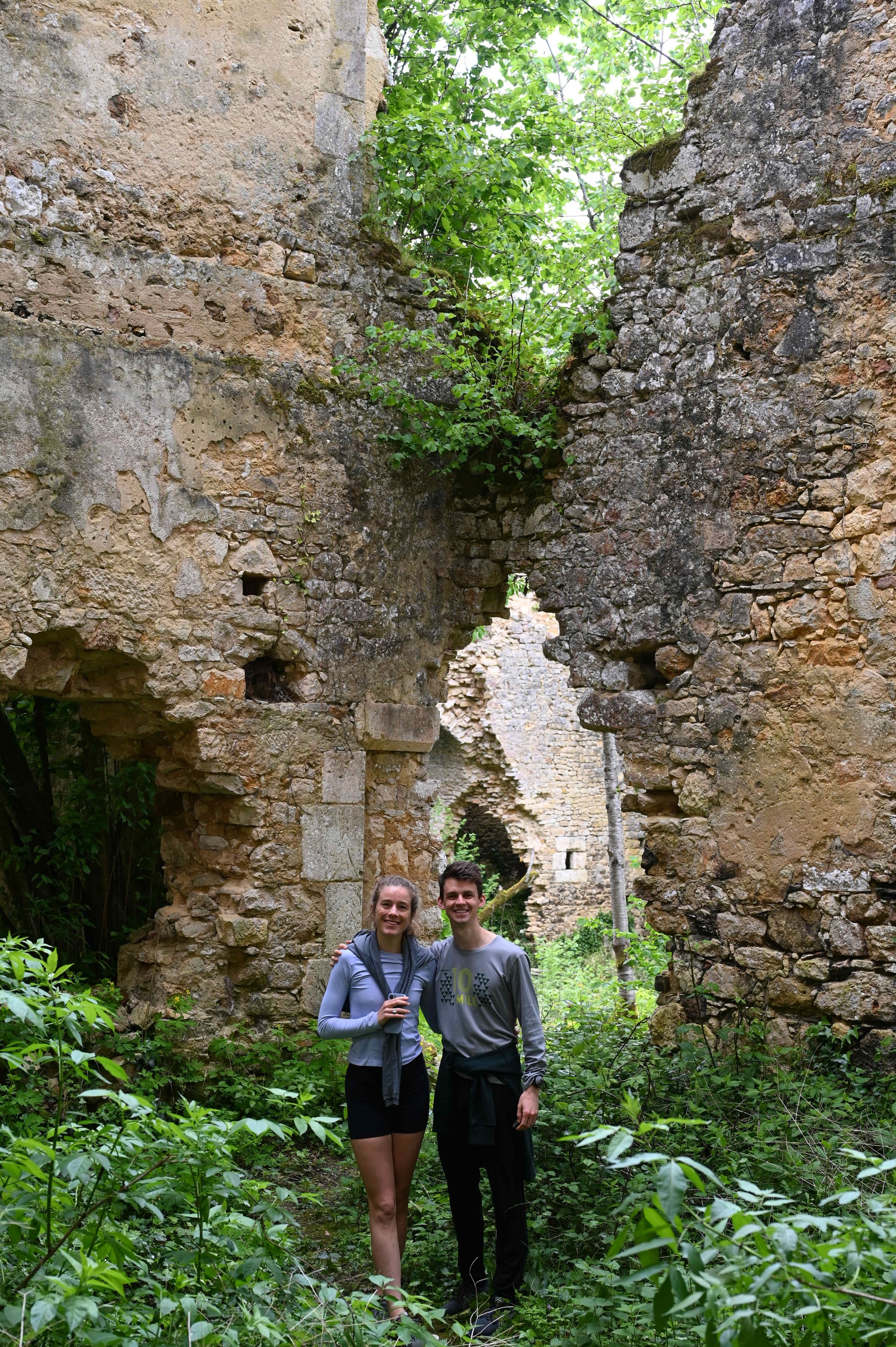
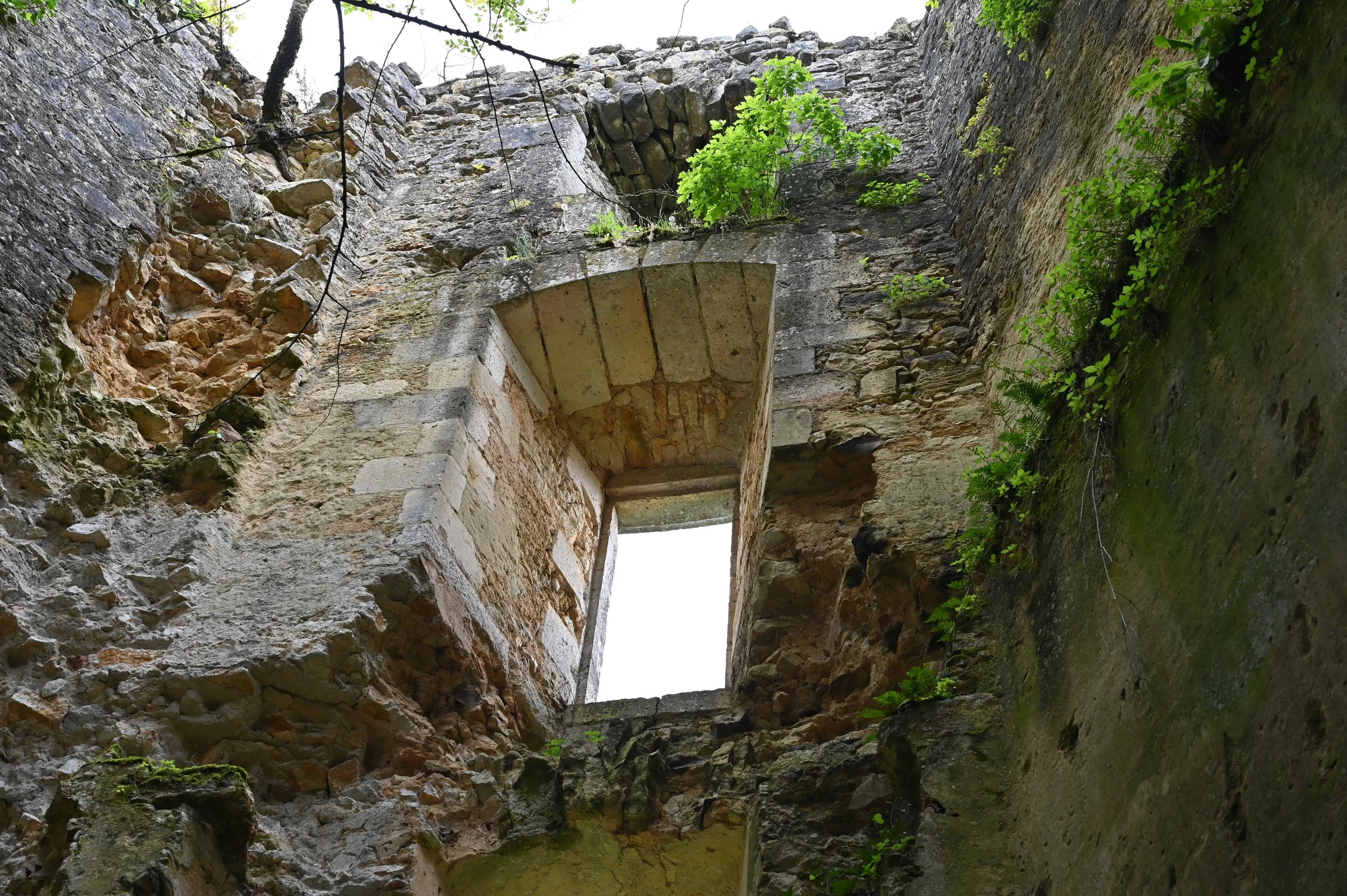
After the Revolution, the castle fell into severe decline. It was partially burned and subsequently used as a stone quarry, leaving it today as a ruin overgrown with vegetation. Among the surviving features are 15th-century Gothic fireplaces, Renaissance window mouldings, and a vaulted cellar accessible from the outside. It was formally recognised by the French state and listed as a historic monument by ministerial decree on 3 October 1946. This designation places it under the protection of the French Ministry of Culture, which maintains the national inventory of protected heritage sites.
Jean du Barry and the Conjuration d'Amboise
The château's most famous connection is to Jean du Barry, the Calvinist lord who owned it in the 16th century and lent his name to one of the most dramatic episodes of pre-war religious tension in France.
When Henri II died in 1559, French Protestants had hoped for a relaxation of the harsh policies directed against their religion. Instead, the young king Francis II retained his father's stance, and his advisors included his wife's uncles, Francis, Duke of Guise and Charles, Cardinal of Lorraine, who through their niece Mary Queen of Scots exercised enormous influence over the king.
In March 1560, a group of Huguenot nobles led by Jean du Barry, lord of La Renaudie, decided to seize power by abducting the young king and removing him from Guise influence, which they considered tyrannical and responsible for the persecution of Protestants. The plot aimed to organise an uprising of thousands of Protestants across the kingdom and force the king to hand control to a more moderate regency, led by figures sympathetic to the Reformation such as Louis de Bourbon, Prince of Condé.
The conspiracy unravelled before it could succeed. The Guise family received detailed information about the plot from a Parisian lawyer named Pierre des Avenelles, whose home had been used as a safe house by the conspirators. On 17 March 1560, the conspirators attempted to storm the Château d'Amboise. Though the court was thrown into panic, the plotters were easily defeated. La Renaudie was caught and drawn and quartered, with his remains displayed at the gates of the town. Between 1,200 and 1,500 of his followers were also killed, their bodies hung from the façade of the château and from nearby trees, or drowned in the Loire.
The French Wars of Religion
The Conjuration d'Amboise was not merely an isolated episode. It was from this moment onward that the struggle between Catholics and Protestants began to spiral into the Wars of Religion, a conflict lasting nearly 40 years. The conspiracy deepened mutual suspicion between the two confessions, and it was around this time that French Protestants became widely known as "Huguenots."
The broader context was one in which Protestants across France felt increasingly threatened. Following the execution of Anne du Bourg, a counsellor to the Parliament of Paris, the reformed movement had begun looking for ways to protect itself politically. Even Queen Elizabeth I of England sent financial contributions toward the conspiracy.
The Edict of Amboise in 1563 eventually ended the first phase of the Wars of Religion, but fighting continued intermittently for decades. The wars were marked by atrocities on both sides, culminating in the St Bartholomew's Day Massacre of 1572, and only came to a formal close with the Edict of Nantes in 1598, which granted Protestants a degree of legal toleration. The château in the Dordogne, now a quiet ruin, was the ancestral home of the man whose audacious and doomed conspiracy helped light the fuse for all of it.
The Long Decline of a Giant
After Jean du Barry's execution in 1560, the château passed through a series of noble families via marriage, eventually settling with the Peyrusse des Cars family, who were the last aristocratic residents. When the Revolution came in 1789, Louis François Marie de Peyrusse des Cars, the then owner, was present at the Estates General in Limousin but subsequently fled into exile, first to Switzerland and then to England, where his family joined him. Their properties were seized by the revolutionary state and sold off as "biens nationaux," the term used for confiscated noble and church estates auctioned during the Revolution. The château and its lands were sold separately to two local farmers, Fanty and Lescure, who had no interest in preserving a medieval fortress and began quarrying it for building stone, a fate that befell countless French châteaux during this period when old noble estates had no obvious new owner willing or able to maintain them. When the Peyrusse des Cars family eventually returned from exile, they found the castle already stripped and ruined, and made no attempt to reclaim or restore it. It passed through several more private hands over the 19th and 20th centuries, and remarkably, as recently as 2024, the ruin was sold again to a new owner with personal family connections to the site, who is now pursuing an ambitious restoration project to save what remains.
The Castle Today
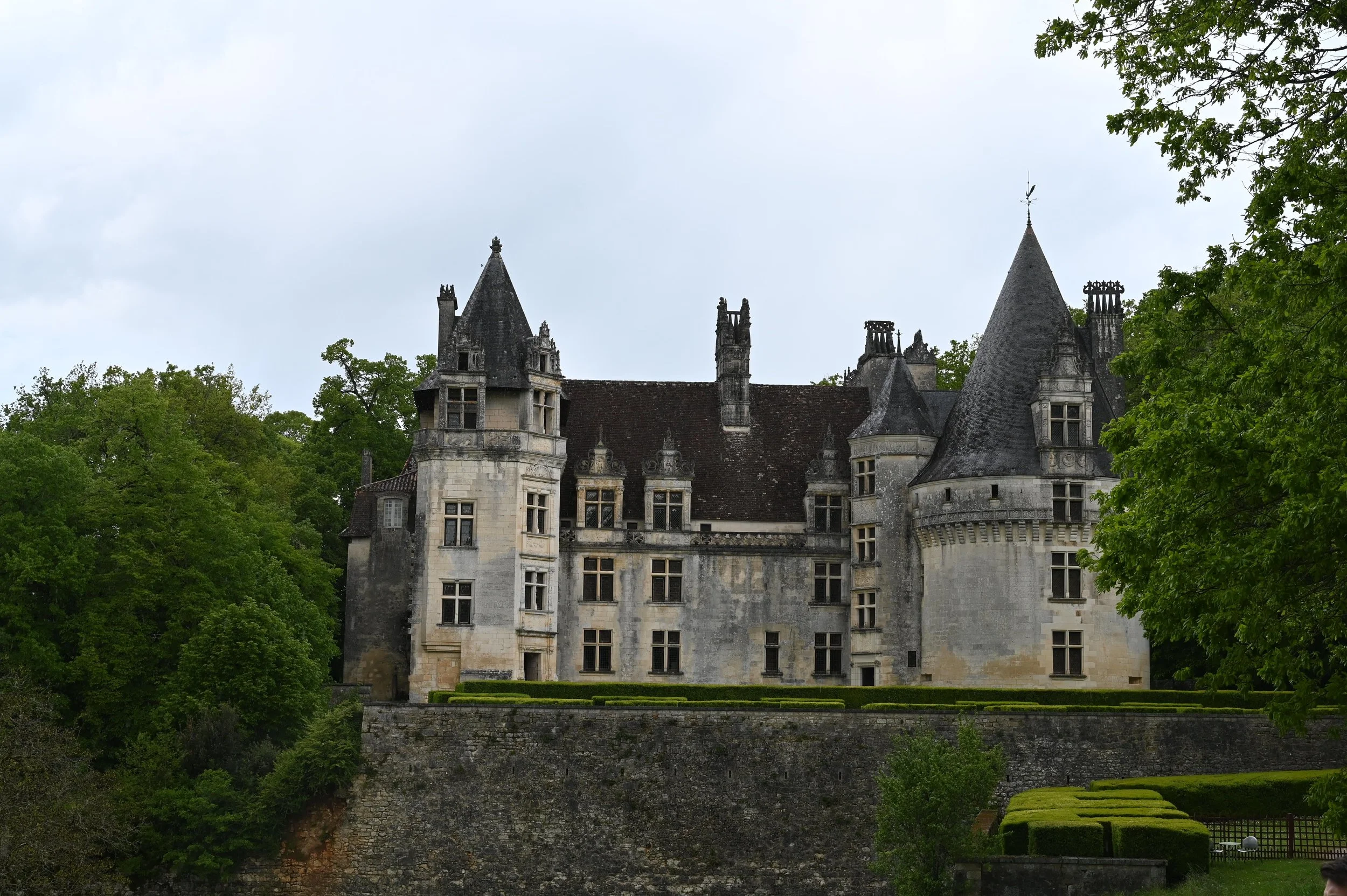
The result of that long restoration effort is one of the finest and best-preserved Renaissance châteaux in all of the Périgord, and a rare example in the southwest of France of a building that genuinely reflects the courtly architectural ambitions of the Francis I era. The state continues to own and manage it today, and it is open to the public, administered under the Centre des Monuments Nationaux, the body responsible for most of France's nationally owned heritage sites. It stands as a striking contrast to its near neighbour La Renaudie: one rescued by the state and restored to something close to its former glory, the other still a romantic ruin slowly being reclaimed by the forest.
Château de Puyguilhem: History and Context
The Castle and Its Builder
The Château de Puyguilhem sits a few hundred metres outside the village of Villars, in the northern Dordogne, about 34 kilometres from Périgueux. Construction began in 1514, commissioned by Mondot de La Marthonie, who was First President of the Parliament of Paris and one of the most powerful legal figures in France. A close friend of King Francis I and a trusted adviser to the king's mother Louise of Savoy, La Marthonie effectively administered the kingdom whenever the king went to war. The château was conceived not as a primary residence but as a secondary home and hunting lodge, modest in scale but lavish in ambition. La Marthonie had spent considerable time at the French royal court and was thoroughly familiar with the great châteaux of the Loire Valley, and it was their style he chose to transplant to the forests of the Périgord.
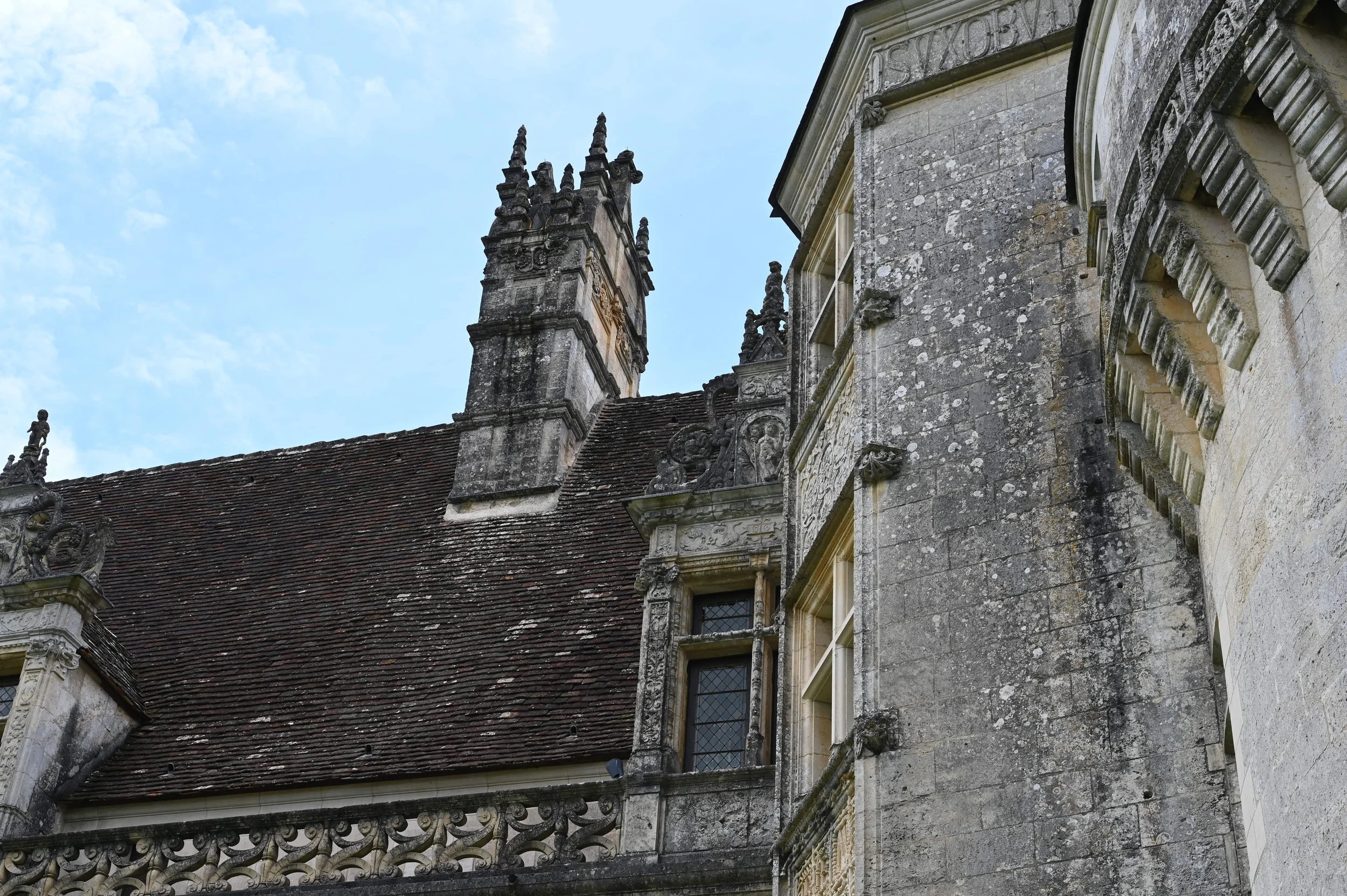
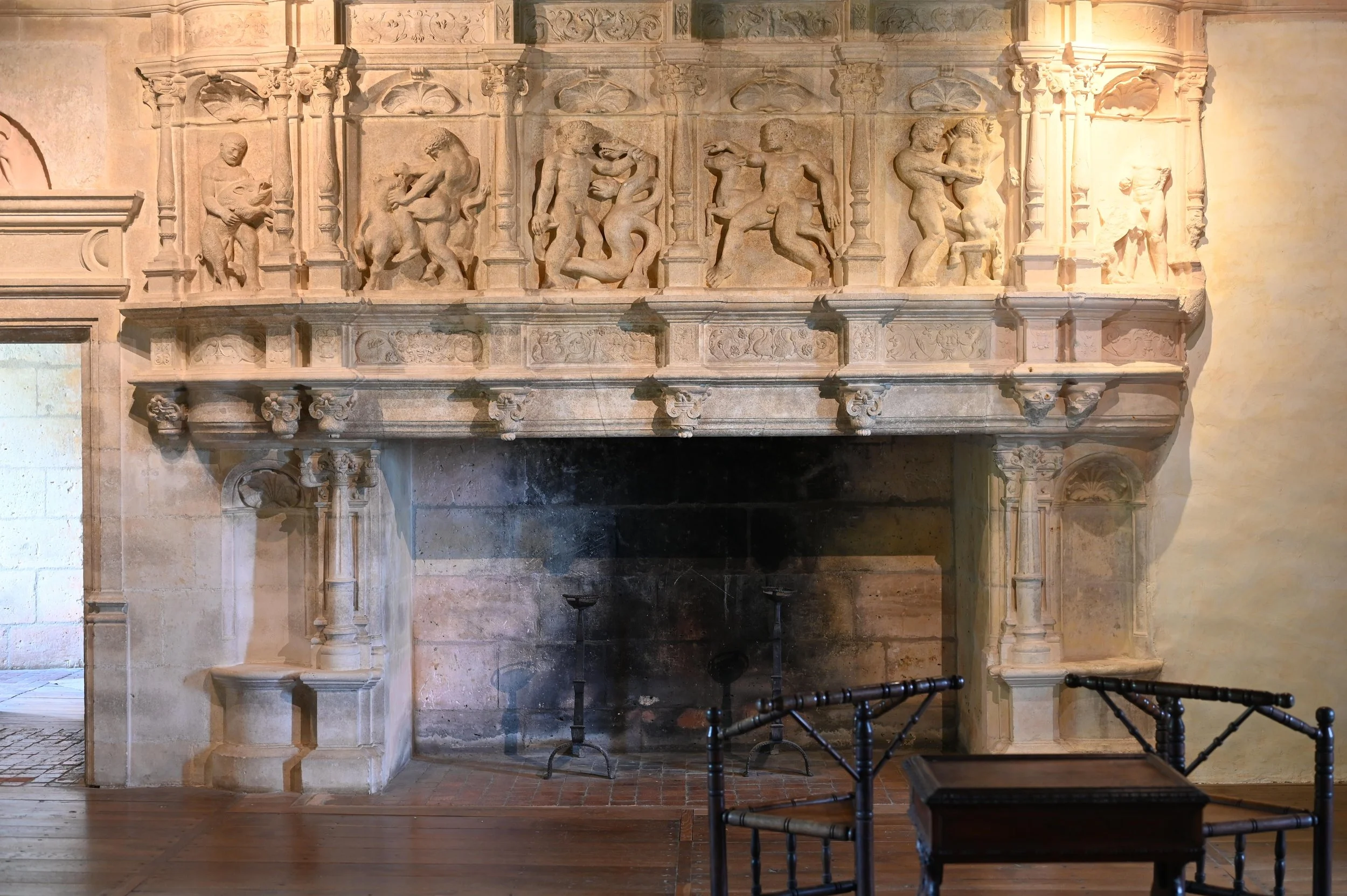
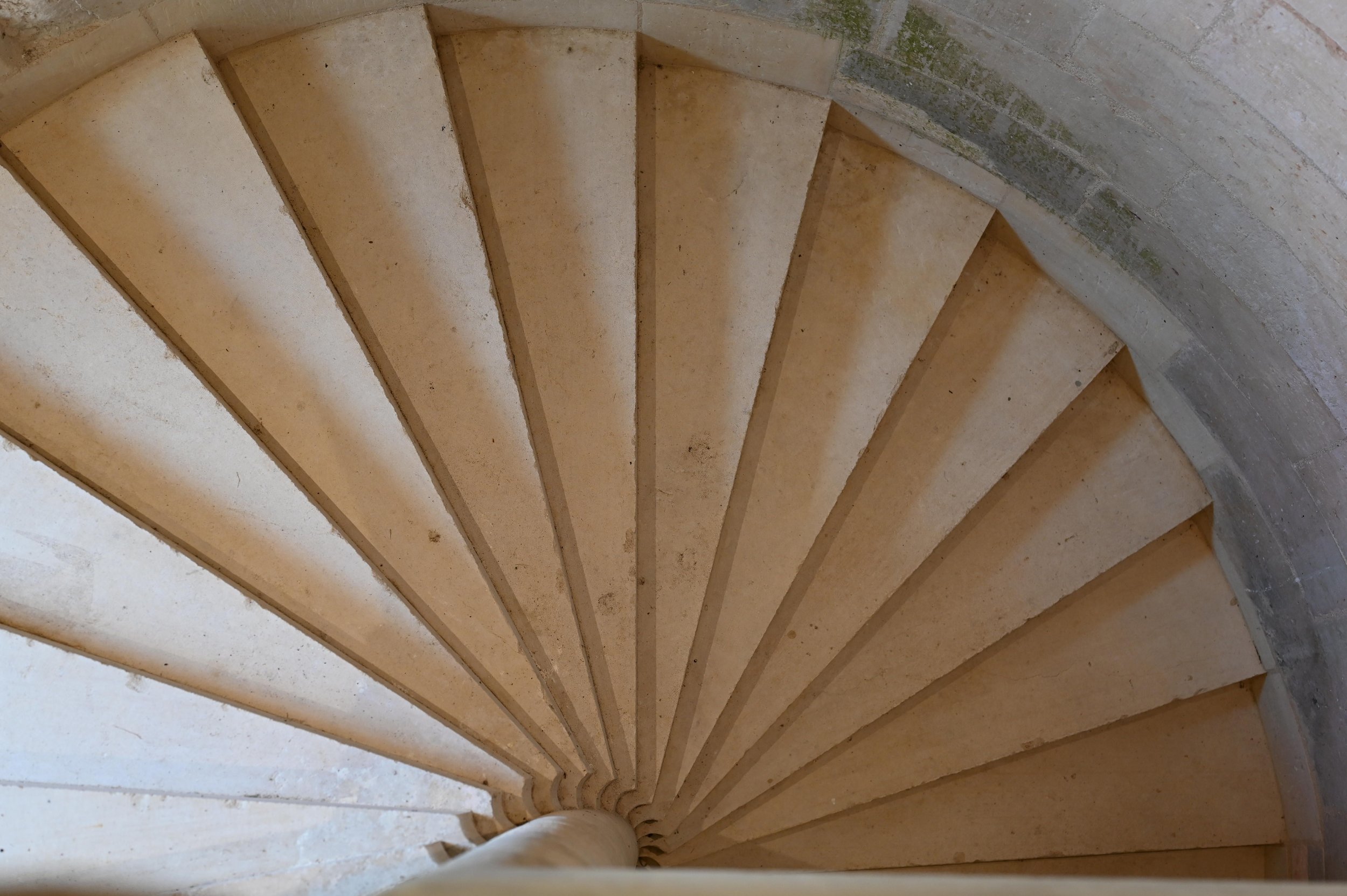
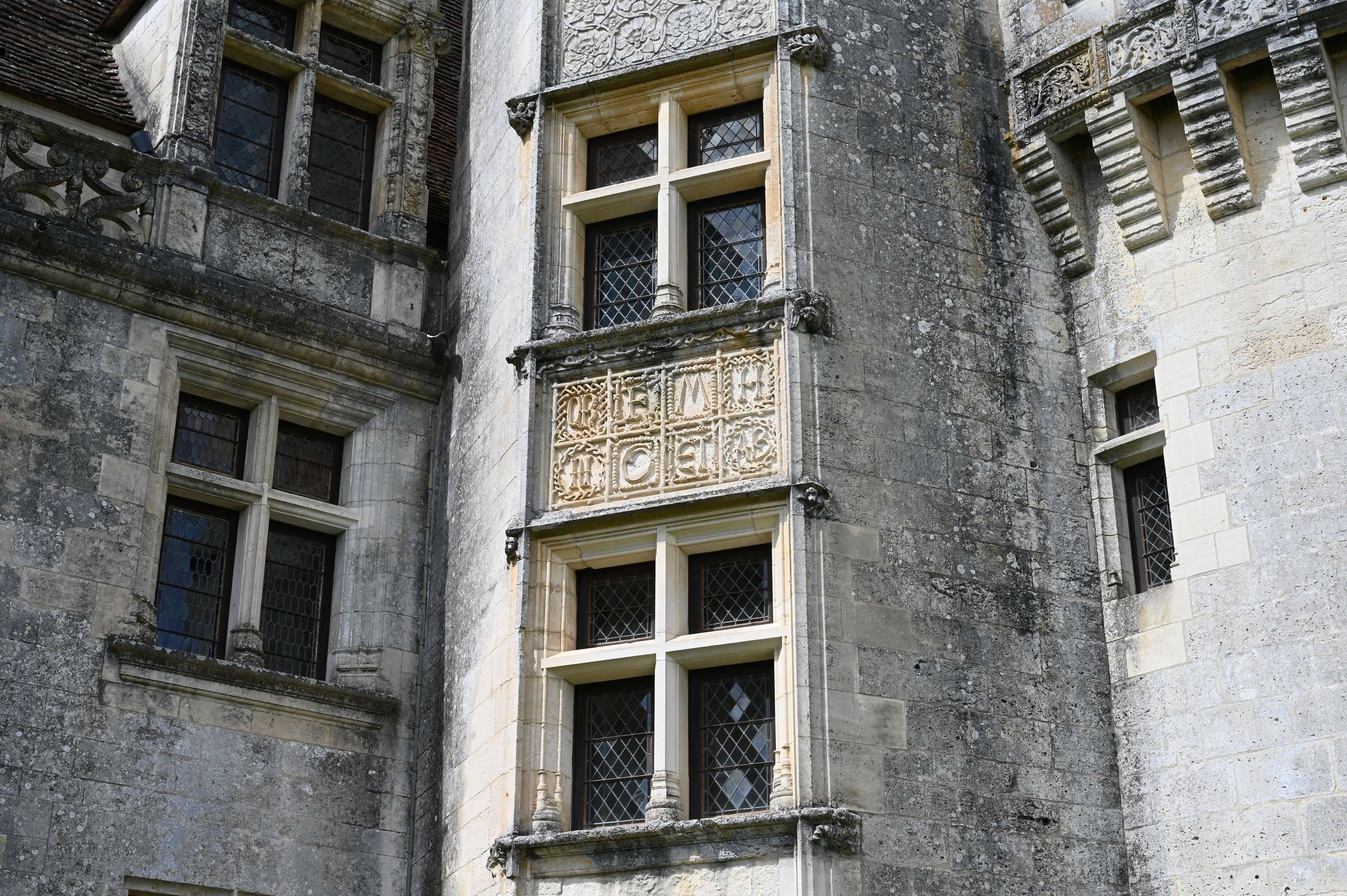
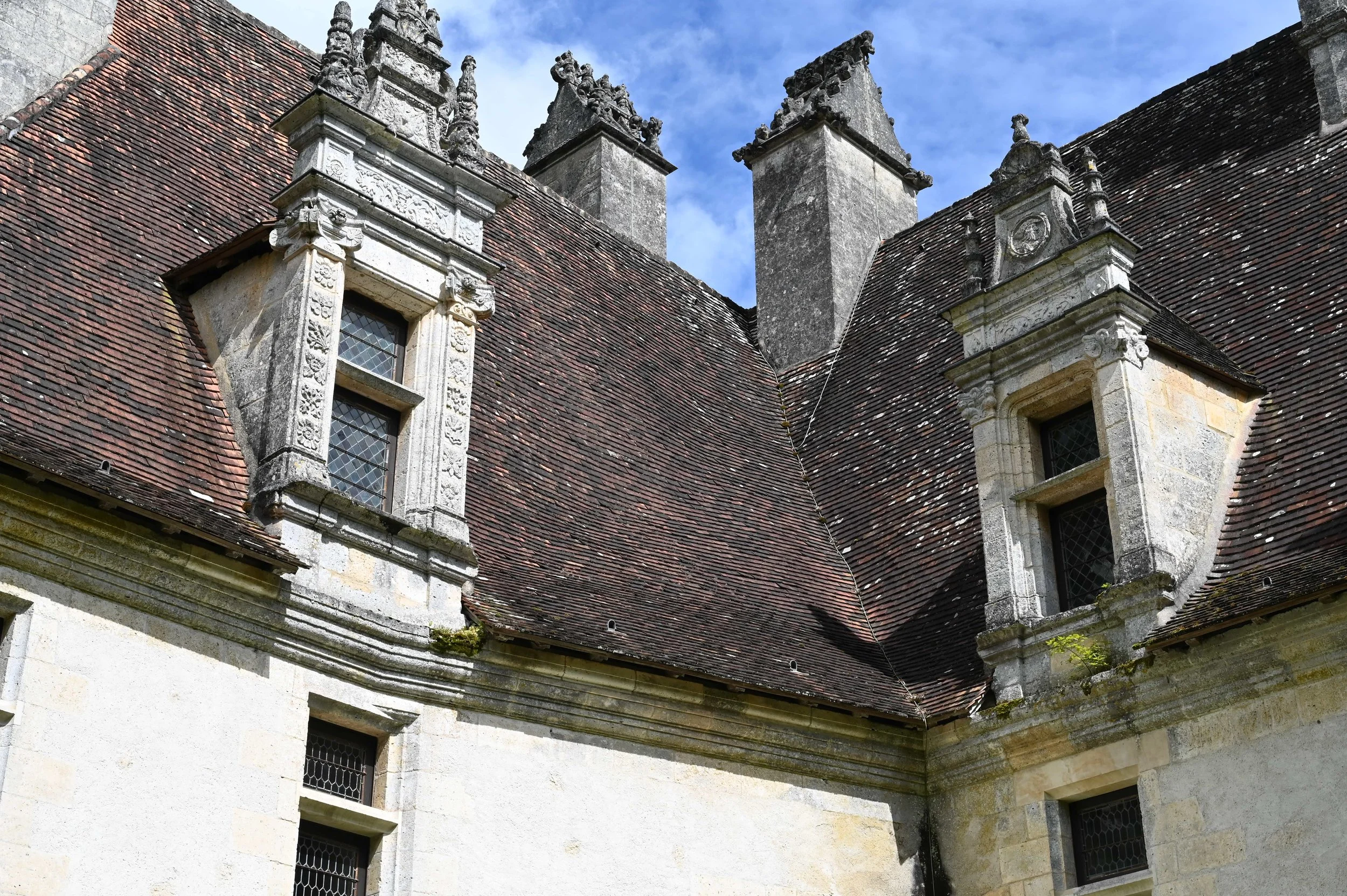
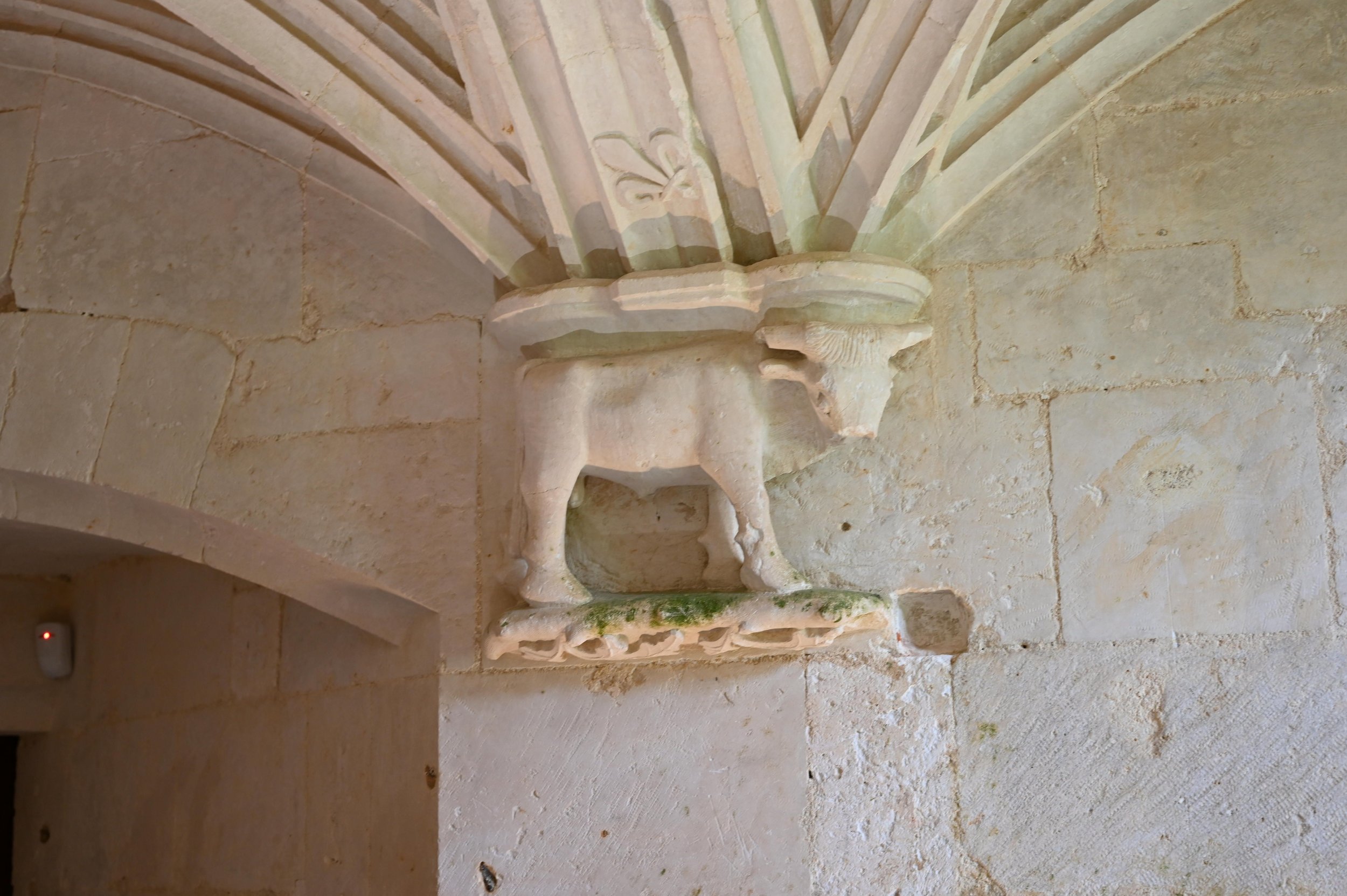
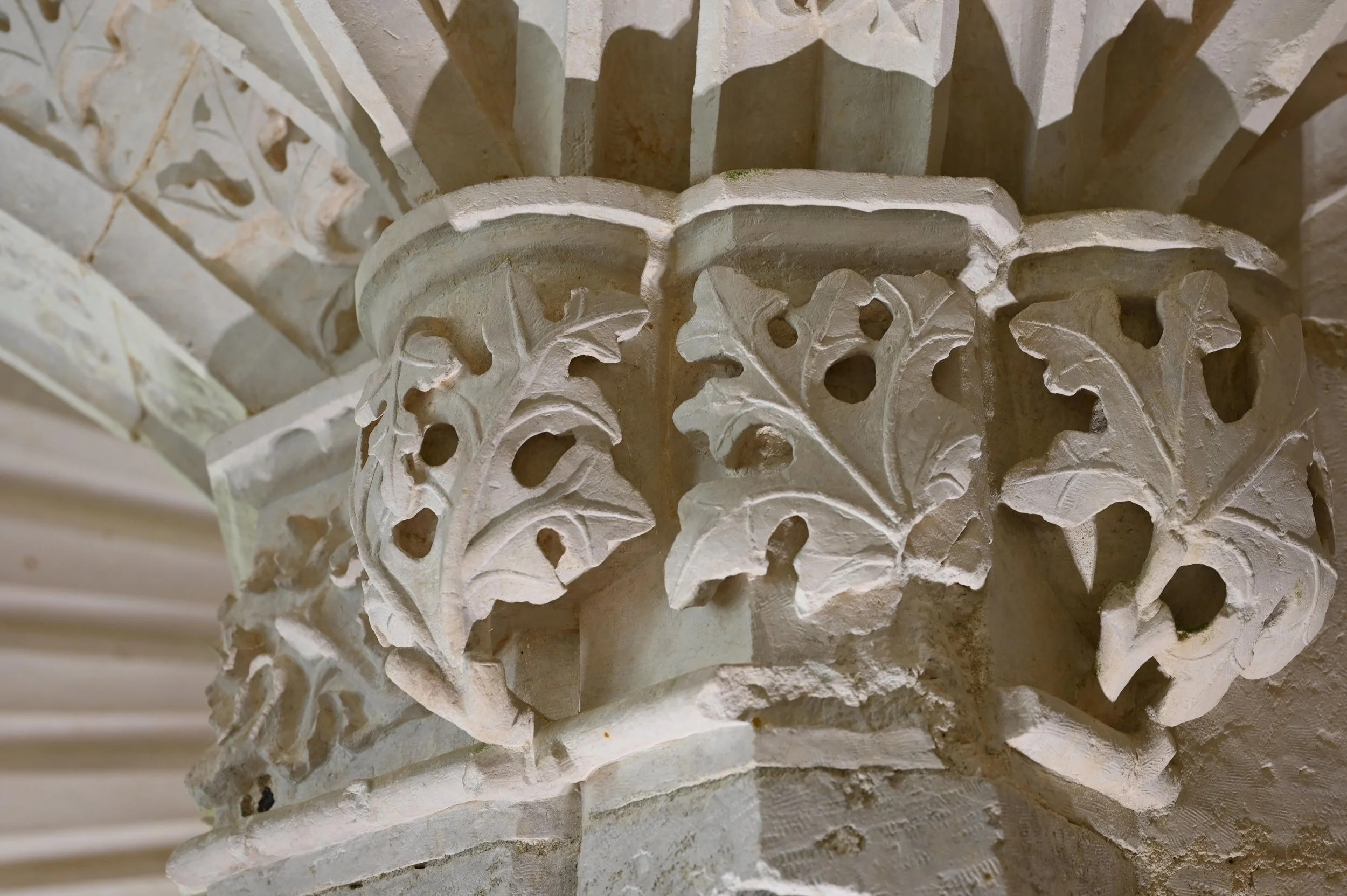
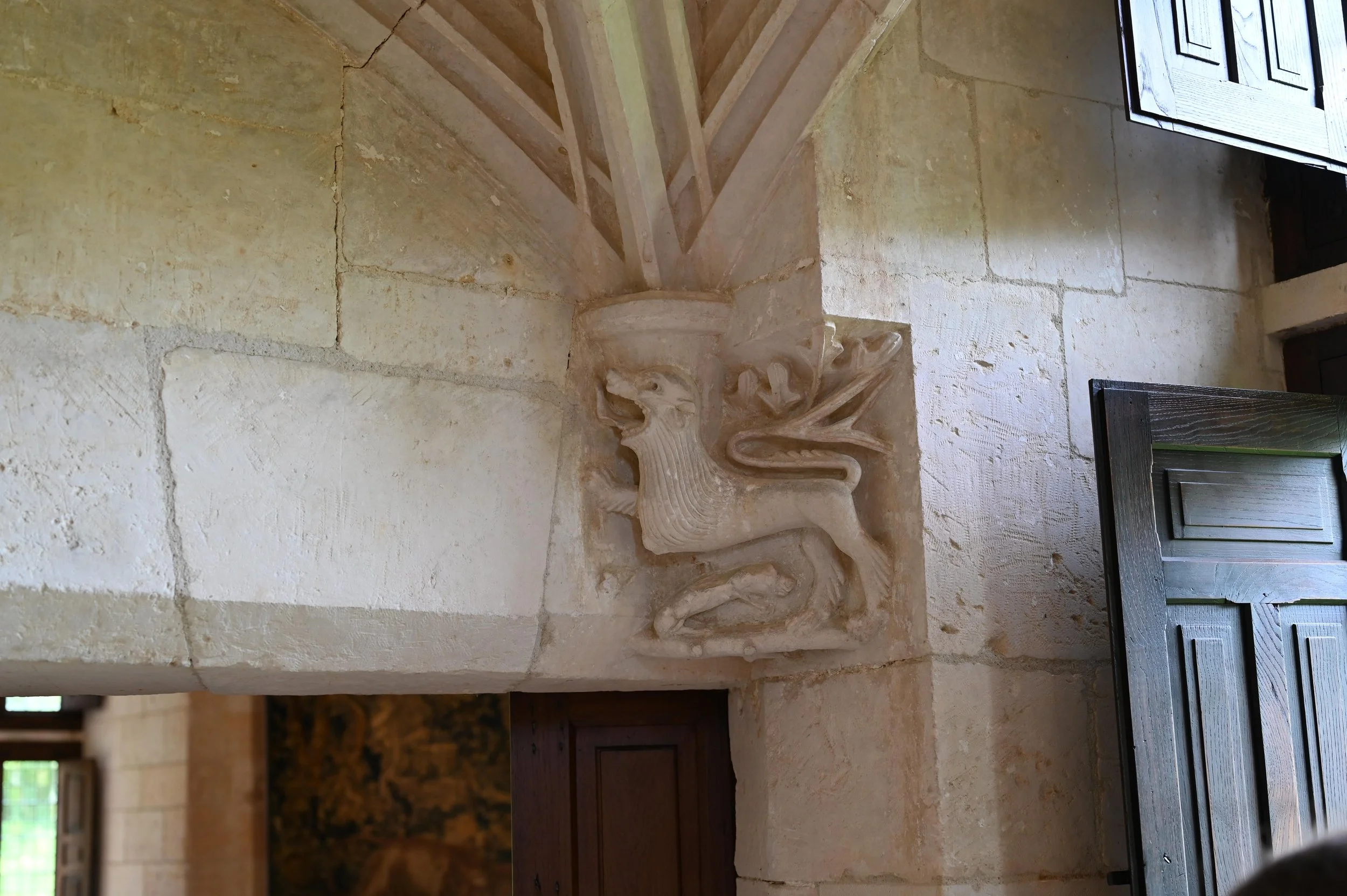
The result was a building unlike almost anything else in the region. Where most Dordogne castles are solidly medieval in character, Puyguilhem has the elegant white stone silhouette, sculpted dormer windows, ornate stair towers and steep slate roofs of a Loire Renaissance palace. The design sits interestingly between two eras: the exterior façade is fully Renaissance in spirit, while the interior plan and the lack of architectural symmetry betray the older Gothic habits of the region. Among the most remarkable features inside is a fireplace in the great hall carved with scenes depicting the twelve labours of Hercules, a classically humanist decorative choice entirely in keeping with the cultural moment of the early 16th century.
La Marthonie died suddenly in 1517 before the project was finished, and construction was carried on for a further fifteen years or so by his brother Gaston, the Bishop of Dax. The castle was eventually completed around 1535.
Later Ownership and Decline
The La Marthonie family held the château for several generations before it passed, through inheritance and marriage, to the Chapt de Rastignac family in the 18th century, who added a residential wing to the left of the main staircase and carried out other interior works. In the mid-19th century it came into the hands of the Dukes of La Rochefoucauld, one of the most prominent noble families in France, who eventually sold it. Once it left their hands it fell into rapid and severe decline. A building contractor acquired it and, in a pattern depressingly familiar across French heritage, stripped it from top to bottom, removing anything of value.
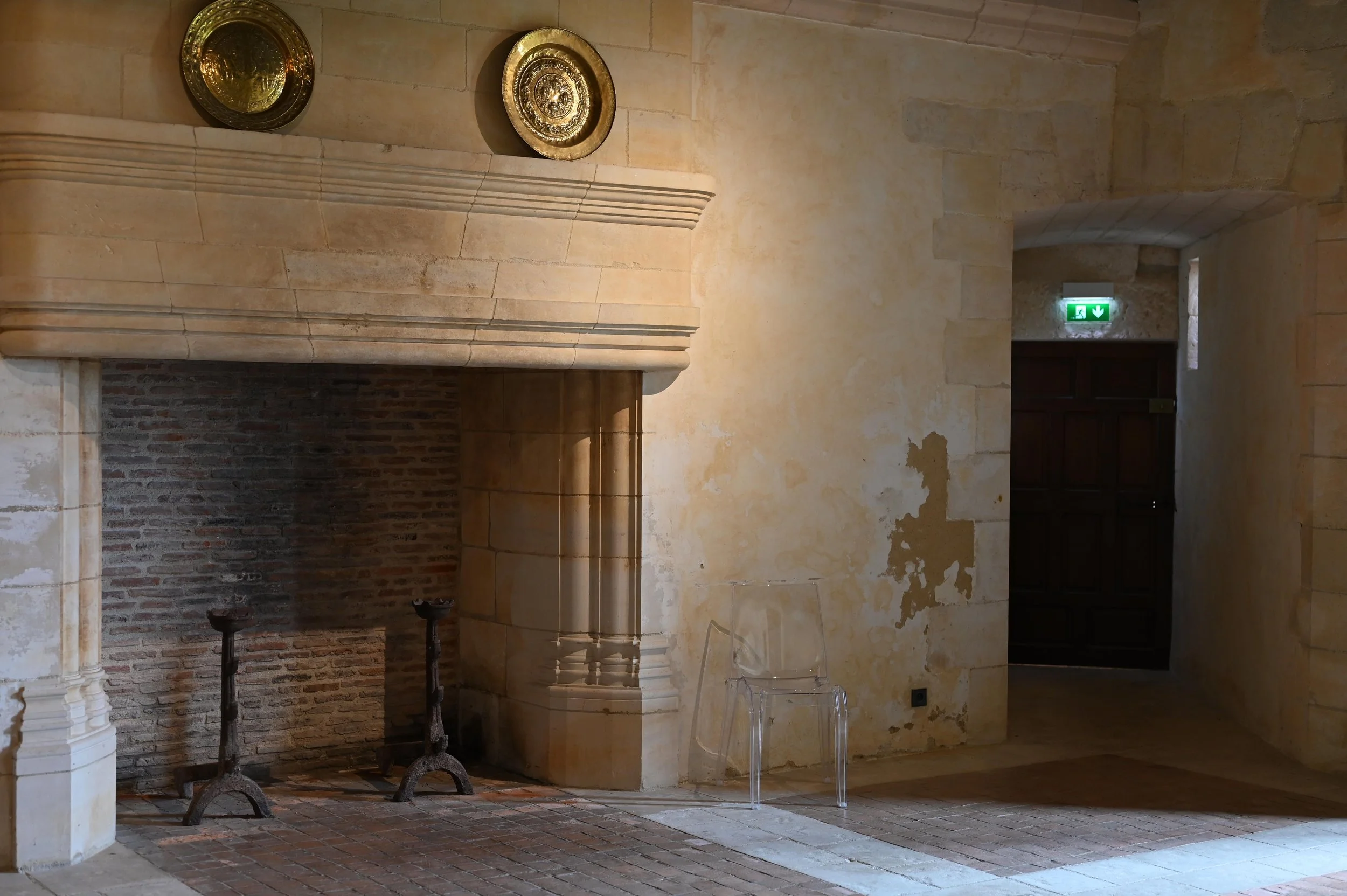
The château was classified as a historic monument in 1912, but at that point the designation did nothing practical to halt the looting or deterioration. It was only in April 1939, when the French state stepped in and purchased the castle and a portion of its grounds, that the slide toward total destruction was finally arrested. Restoration work began that same autumn, entrusted to Yves-Marie Froidevaux, chief architect of the Monuments Historiques, and continued for more than two decades. Craftsmen spent twenty years recreating sculpted decorations, restoring the original layout and relaying ancient paving that had been ripped out.
Paris