Underpinning all of these pressures is the geography itself. This vast transitional band of land, where the Sahara ends and the more temperate and lush sub-Saharan regions begin, creates profound climate challenges. For the people who call this frontier of fertility home, the line between abundance and scarcity can be razor thin. The difference between a good harvest and widespread hunger can often come down to a single failed wet season, and the height of the river can spell either bounty or destruction through flooding or recession. Though these consequences are a part of life in this region, most of the population resides in areas where precious water still flows.
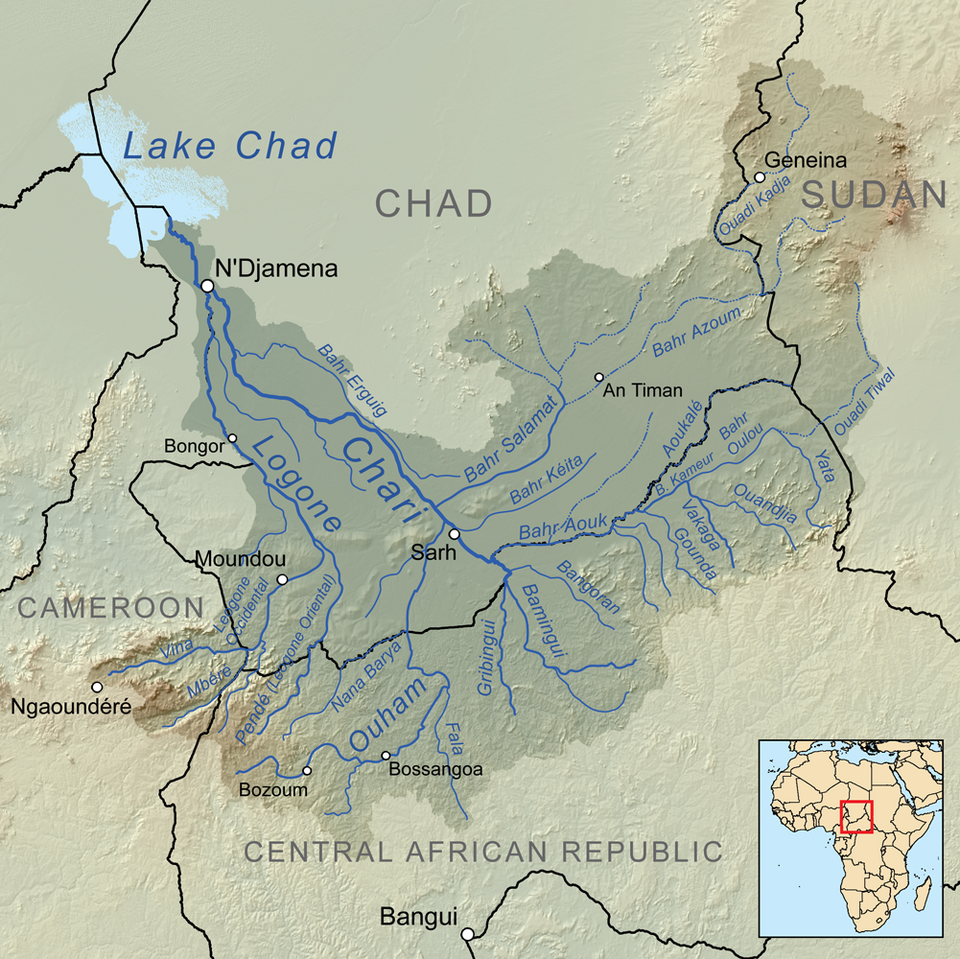
Chad is a classic example of this population distribution and crowding around fertile land. Roughly half of the country's population resides in the southernmost fifth of the nation, where the Chari River provides an abundance of fish and fresh water for both drinking and agriculture, as well as lower average temperatures than the far more arid areas that lay just to the north and extend all the way into the Sahara. This concentration of people around scarce fertile land is itself a driver of the intercommunal tensions I described earlier, as competition over water access, grazing rights, and arable soil between settled farming communities and nomadic herders has been a source of recurring conflict across the Sahel for generations, and one that only intensifies as the climate continues to shift and the fertile band narrows further.
Most of southern and western Chad exists in the basin of what used to be a massive mega-lake which spanned over 150,000 square miles at its height over 7,000 years ago. Though this lake has continually shrunk to now covering somewhere between 500 and 1,500 square miles today, its ancient drainage basin still extends far beyond the lake's current borders, reaching all the way to western Sudan and to the midpoint of the Central African Republic. It is this vast basin and the rivers it sustains, chief among them the Chari and its sprawling network of tributaries stretching south into the Central African Republic, that provide the water which draws and supports the dense population of southern Chad. It is also through this interconnected system of waterways that Guinea Worm larvae are carried and consumed by unsuspecting communities along the banks, and all of the aspects of the Sahel I have described, its low human development, rural population distribution, small urban centers, fragile security, and compromised public health systems, have combined to create the perfect conditions for the disease to persist.
Remarkable progress has been made in the fight against Guinea Worm over the past several decades, and what was once a disease affecting millions across Africa and South Asia has been reduced to only around 10 recorded cases in human beings per year. Yet it persists, and almost exclusively within the Sahelian countries I have been describing, Chad, Niger, Mali, the Central African Republic, and Sudan. Each year the number falls and full eradication feels closer, though the finish line remains elusive as the disease has also been found in animal populations, particularly dogs and baboons, which has complicated what once seemed like an imminent final victory. It was this fight that brought me to Chad, to the banks of these rivers and the villages along them, but what I found there was so much more than the work that carried me across the ocean.
To me the Sahel is a place of remarkable beauty where the earliest origins of human civilization in sub-Saharan Africa can be traced, and you can follow the path that humankind has taken. When you look upon the ancient structures scattered throughout the Sahel, you can see some of the oldest permanent settlements and mudbrick habitation sites known in the region, stretching back over two thousand years. When you talk to the people who inhabit this area, you can learn of cultural practices still being undertaken every day that stretch back thousands of years and walk the shores of rivers that have flowed for tens of thousands.
It was an absolute privilege of my life to experience this part of the world and to live and work alongside such wonderful folks who shared a piece of their world with me. Each time my plane touched down in N’Djamena and I heard the swell of a dozen languages around me before being greeted by the wall of heat that pushed through the doors as they opened onto the tarmac… it felt like a homecoming.
But beyond nostalgic sentiment, what i dream about most now is future day that has yet to come to pass. I keep a waking eye on news from the Sahel and the health sections of my favorite publications, hoping that one day I will see the declaration of full eradication of Guinea Worm disease in size 72 font. The dream of Jimmy Carter realized.
And on that day, I will again see my self as a small cog in a great human machine that turns and squeaks and groans with the effort of millions. When the news reaches me I’ll stand and shout and dance as I was taught by my colleagues in Chad. When that day finally comes… it will serve as a testament to the efficacy of well funded public health programs, but even more so, that day will once again make clear to the world the tenacity of the Sahelian people and their enduring ability to adapt and thrive in the land between sand and soil.
The Land Between Sand and Soil
-Two Years with the Carter Center in Danamadji, Chad
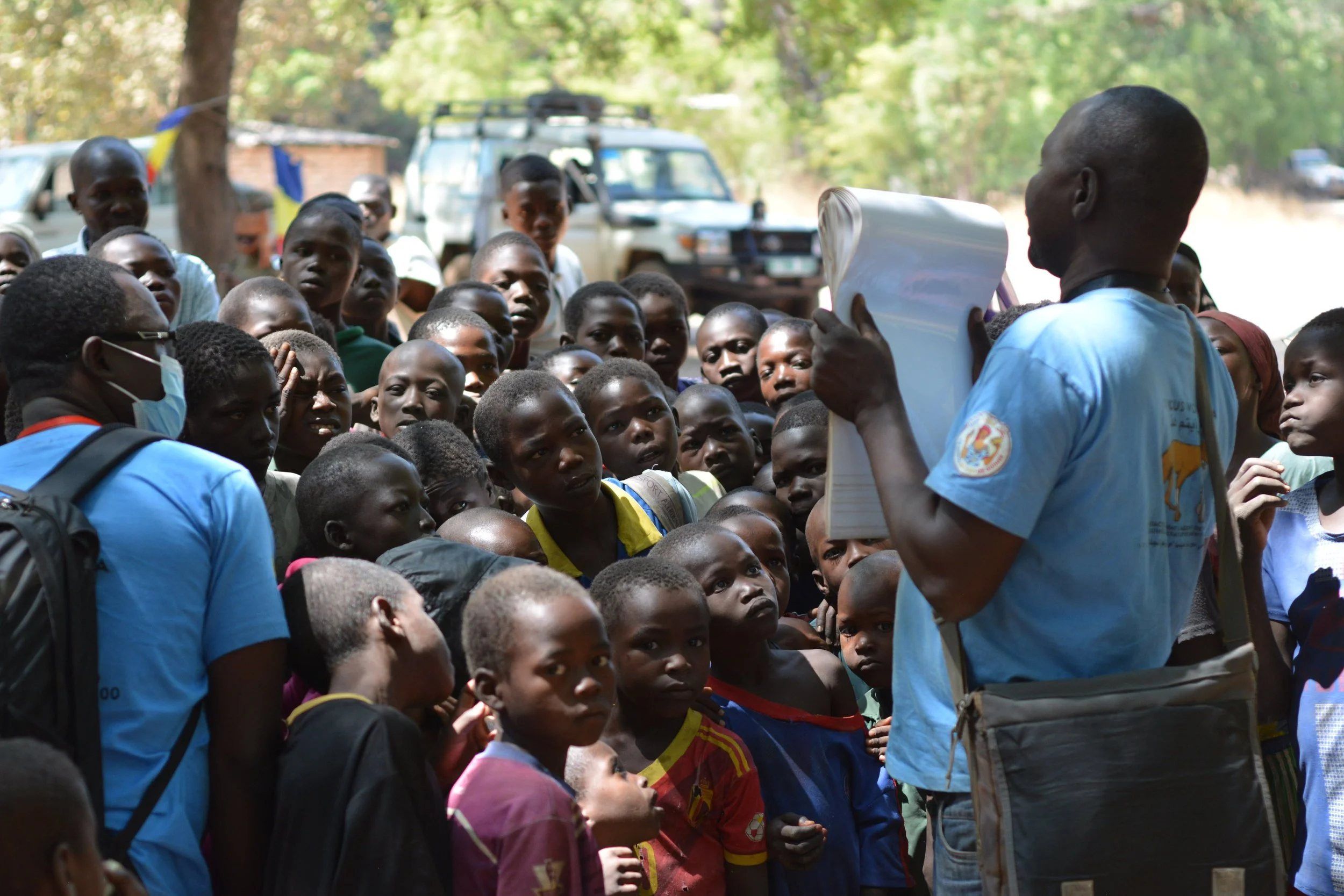
Below is a collection of images that I captured over the course of two years while working for the Carter Center in southeastern Chad. While I resided in the third largest city of the country, named Sarh, most of my work was undertaken in the rural areas which lay between this city and the northern frontier of the Central African Republic. I was responsible for a zone that comprised over 100 villages and spanned over 700 square miles, which naturally offered a chance to see the true diversity of the Sahel up close.
For a bit of background, the Sahel is a geographically, geopolitically, ecologically, and demographically diverse area of Africa that spans the continent from Senegal to Sudan, and this diversity is as much a source of remarkable beauty as it has been a stage for human struggle. This region is a melting pot of cultures and history, and this friction between not quite belonging in North Africa and not quite resembling sub-Saharan Africa, either ethnically, linguistically, or culturally, has been the defining characteristic of the region for hundreds of years. It is a place where cultures intermingled and developed into something unique and new, as goods exchanged hands along ancient trade routes and languages bled into one another to form new tongues and dialects.
This uniqueness has given birth to fascinating traditions and rich histories, offering some of the most distinctive music in the whole continent, often termed Sahelian rock, Desert Blues, or Tuareg rock, as well as some of the most ancient archaeological sites known on Earth. Settled pottery cultures existed here as far back as 1500 BC and domesticated millet was being cultivated by 1200 BC, and the echoes of that continuity are visible everywhere. Decorative clay jars still crafted in centuries old traditions, hand forged knives and matching sheaths made by local blacksmiths, and fishing spears and arrows whose forms have likely changed little in thousands of years all speak to a culture that has maintained a profound connection to its own history.
What is perhaps less known to the outside world is that the Sahel is also home to one of the most distinctive architectural traditions on Earth, known as Sudano-Sahelian architecture. Rather than the huts and temporary structures that many people associate with the African continent, the Sahel produced a tradition of monumental earthen construction using mudbrick and adobe plaster, with great wooden beams jutting from the walls that serve both as structural support and as permanent scaffolding for the community maintenance these buildings require. The earliest evidence of permanent mudbrick architecture in sub-Saharan Africa is found here, dating back to around 250 BC at Jenné-Jeno in present day Mali, and the tradition reached its most celebrated expression in structures like the Great Mosque of Djenné, the Tomb of Askia in Gao, and the ancient learning centers of Timbuktu, several of which are now UNESCO World Heritage Sites.
Every April, before the rains arrive, the entire town of Djenné gathers for the Crépissage, the annual replastering of the Great Mosque, in a tradition that is equal parts practical necessity and communal celebration. Men and boys climb the walls and apply fresh banco, a mixture of clay, water, and rice husks, while women and girls carry water from the river, elders offer guidance from the terraces, and musicians play throughout. It is a living building, maintained by living hands, in a tradition that has continued without interruption for centuries. Still, these walls have survived a great deal beyond the seasonal rains.
France and other European powers arrived in the late 19th century and spent the better part of the following six decades administering vast stretches of the continent with a violence and extractive indifference that reshaped everything it touched, the borders, the governments, the economies, and the social fabric of peoples who had been governing themselves for millennia before a European flag was ever planted in their soil.
No honest account of the modern Sahel can avoid the weight of European colonization and its enduring consequences. France in particular carved this region into administrative units that bore little relationship to the ethnic, linguistic, and cultural realities on the ground, drawing borders that split peoples like the Tuareg across multiple countries and lumped together communities with long histories of tension. The institutions left behind at independence were designed to extract resources and maintain control, not to serve populations, and the governments that inherited them were in many cases propped up by Paris long after independence so long as French economic and strategic interests were protected. The uranium beneath Niger, the trade routes through Mali, the military bases across the region, all remained instruments of continued French influence long after the colonial flags came down, a relationship that much of the Sahelian population has in recent years decisively and loudly rejected. It would be too simple to lay every contemporary crisis in the Sahel at the feet of colonization, but it would be equally dishonest to discuss the region's instability, its weak state institutions, its arbitrary borders, and its governance failures without acknowledging the foundation on which all of it was built.
Building functioning nations overnight after decades of extractive colonial rule would be a tall order for even the most prepared societies, and the Sahel was given neither the time nor the tools to do so. But colonial legacy is only one thread in a much more tangled web, and the causes of instability in the region are deeply interconnected and resist simple explanation. Weak state presence across vast, sparsely populated territories has created governance vacuums that armed groups and extremist organizations have proven adept at exploiting. The proliferation of weapons following the collapse of Libya in 2011 flooded the region with firearms and fighters that fundamentally altered the scale and lethality of local disputes.
Poverty, corruption, and the marginalization of young people with few economic prospects have provided a steady recruitment pool for groups that offer belonging, income, and purpose. Climate change has intensified competition over the shrinking fertile land, pushing farmers and herders into increasingly desperate conflicts over water, pasture, and migration routes that were once managed through long established customary agreements. And this region, sitting at the crossroads of Islamic North Africa and animist and Christian sub-Saharan Africa, has not been immune to the deliberate exploitation of religious identity by outside groups seeking to deepen existing fault lines. What is often missed in outside accounts of Sahelian conflict is that communities here have developed sophisticated traditional mechanisms for resolving these disputes over centuries, through customary councils, elder mediation, and codified agreements governing land and water use that predate any modern state. These institutions remain the most trusted and often the most effective means of keeping peace at the local level, and they represent a resilience that is as much a defining characteristic of the Sahel as the conflicts that threaten them.