The Exclusion Zone. Reactor #4. The Dead City of Pripyat.
My first glimpse into the world left behind by the 1986 Chornobyl disaster came from The Vice Guide to Travel in 2007. I was captivated by the history of the events that led to the meltdown, but even more enthralled by what had been left behind. In late 2019, I had the chance to visit the site myself.
This is what I found.
-
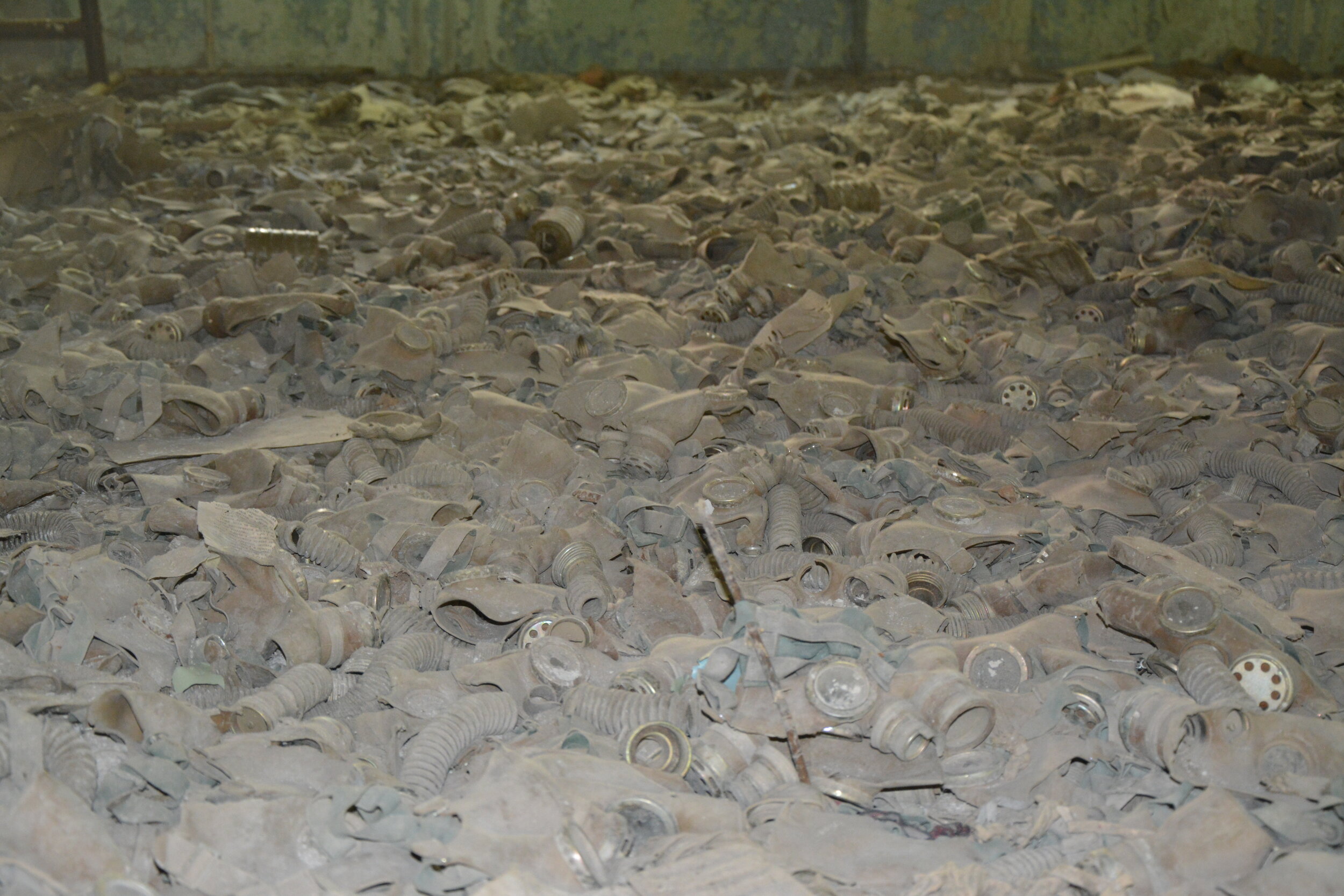
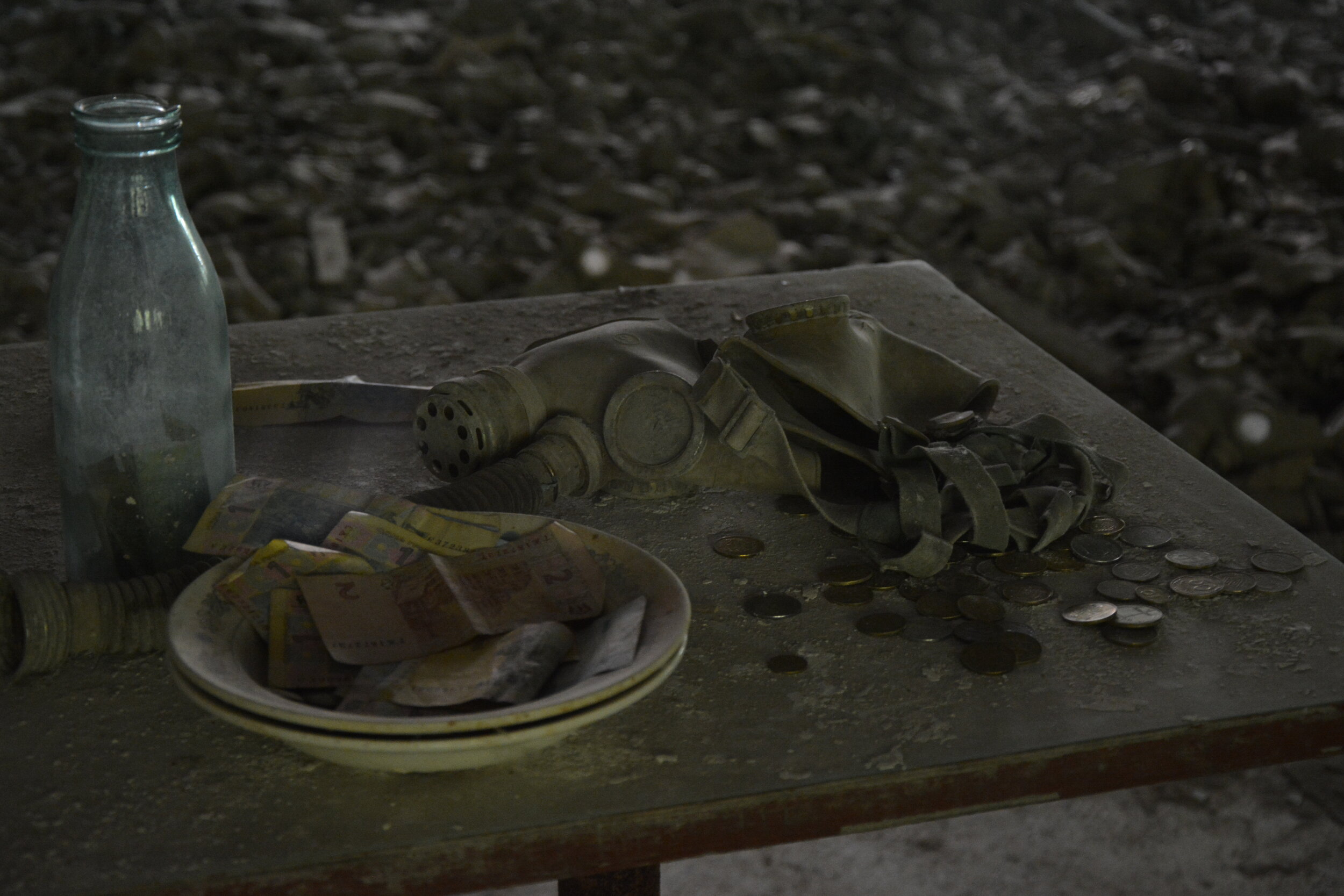
The cities surrounding the reactor were ordered to evacuate en masse, only days after the explosion. A fleet of buses arrived without warning. The residents, once full of hope for their futures in the forested northwest of Ukraine, had only minutes to decide what to take and what to leave behind. Looking now into their mutilated homes, I ask myself: how much of one’s life can fit into a single suitcase?
But for these people, there was no time to ponder an answer. The question was swallowed whole by urgency, and their choices made in haste and desperation.
Panic moved like a second wind through the narrow halls and thin walls of their homes, further Amplified and heightened through the voices on loudspeakers outside. Voices of stern command rushing their steps, demanding their haste.
Yet further away, beyond sight or sound, an invisible fire was raging.
This fire was just but a simmer at first, mostly localized around the power plant itself. But in the coming hours after the explosion, winds pushed and propelled this invisible Inferno far far away. Ash fell on the city. The sky above the reactor glowed. The forests aside the city and in the path of the prevailing winds were stripped of their color and wilted as invisible particles ripped their cells to pieces.
The citizens of Chernobyl and Pripyat knew not what they breathed in as they panted and rushed towards waiting buses. They did not know what pierced their bodies with every gust of wind. Those in “control” kept the danger hidden—for panic could kill in an hour what radiation might kill in a year. Official explanations were curt and uninformative, bereft of urgency.
Still, one message was clear to all who were present in the zone around the burning reactor… This was an unspoken truth that needed no language, nor did it require the forceful shout of a Soviet soldier to be heard. This message rang out that week like a cold steel bell:
Something was incredibly, horrifically, wrong.
Despite their fear and confusion, many of those evacuated believed they would return within a month and packed accordingly. But it is now known that twenty thousand years must pass before human settlement can safely resume. Months after the evacuation, a concrete sarcophagus was built around the remains of the reactor core to keep death from slithering out of the ruins. For miles around the disaster site, every building was sprayed with a special solution to prevent radioactive dust that had settled on them from dislodging and drifting into the prevailing winds destined for Central Europe. A simple Breeze could poison a continent.
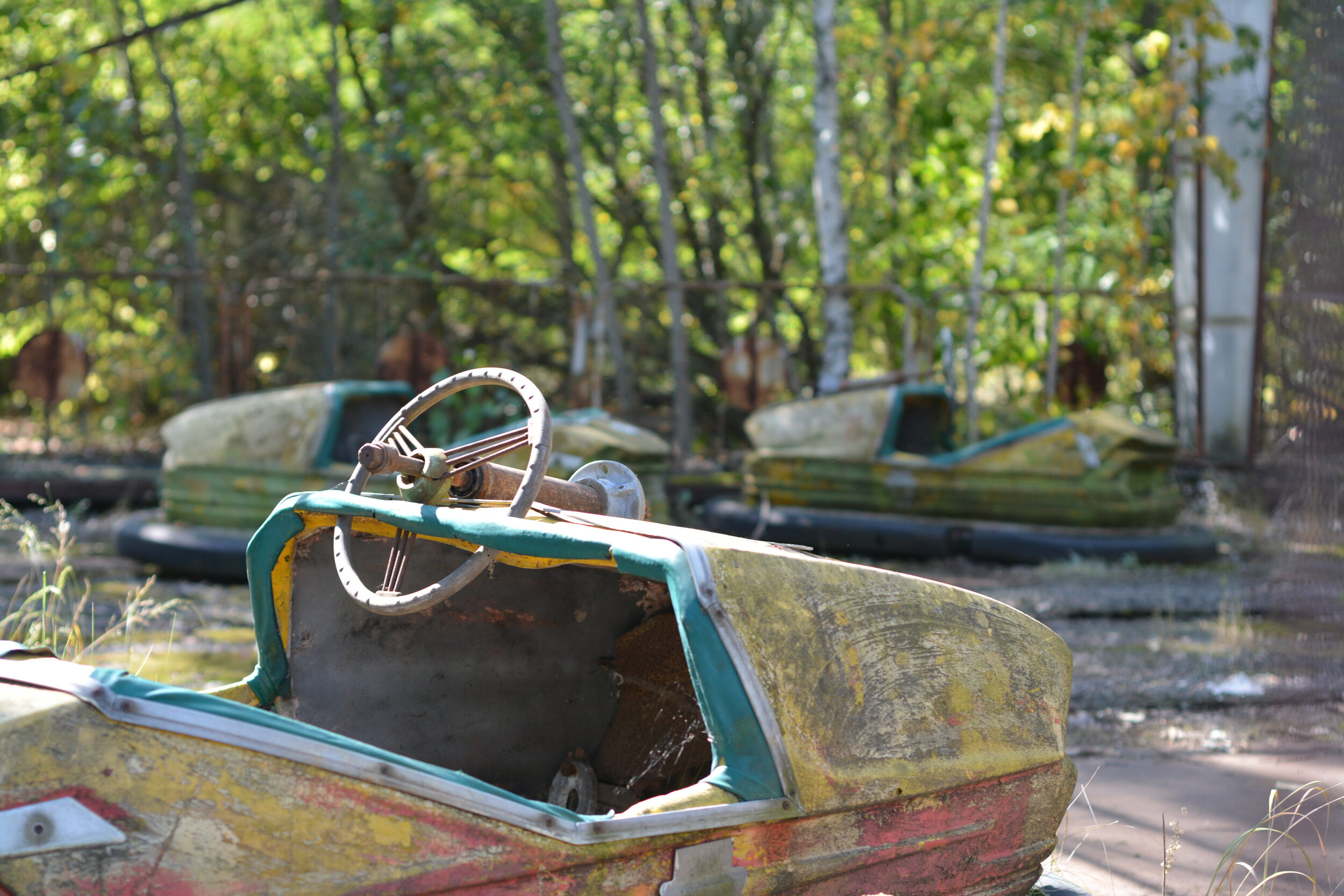
Belongings left behind were burned or buried. Cars left to rust where they were last parked. Liquidation they called it. 50,000 lives down the drain.
Eventually, the displaced and the dispossessed alike arrived at a reluctant acceptance that they would remain forever exiled from their former home. That their City is now a tomb. A thousand-square-mile territory where humans were forbidden to live under threat of arrest or even lethal action, should any trespasser threaten the containment facilities around the disemboweled reactor.
Now this area is mostly known by a more ominous name:
The Exclusion Zone
-
Most images I had seen of Chernobyl showed winter-ashen branches, grey skies, and a stillness soaked in snow. But my visit took place in the waning days of summer in 2019. What I found, arriving in a fifteen-seat tour bus, was instead… green. Overflowing, abundant, even eeire… green.
Lush wilds spilled through the cracks of the concrete we walked on. Beyond the streets and sidewalks, vegetation climbed over building foundations, as if to soak up the worst of humanity’s misdeeds. I watched from afar as dogs, birds, and deer wandered freely along miles of broken roadways. I listened to the pitter-patter of animals moving through the woods beyond me.
My tour guide noticed as i shifted my head and perked my ears as I peered into the forest, though I dared not take another step closer, lest my Geiger Counter scream to life. She followed my gaze and told me that even in that forbidden place, the Red Forest, endangered animal species of Europe have found safe haven. Beyond the species that we had witnessed throughout the day, she told me that even bears now roam through these hollowed-out remains of human achievement.
Bordering these pavement corridors, once so busy with machines and now supplanted with persistent life, cars and gas stations sit silent and idle. The roads they once served are now slowly ground back into dust by simple time and the callous indifference of the natural world.
That life thrives even where our poison still lingers…. It's a strangely comforting thought to me. Maybe it's only natural to find a melancholy in a place like this. To smile at a blade of grass growing out through a lampshade.
The apartments and homes I walked through were ransacked long ago by trespassers known simply as stalkers. The name suits them well. Interlopers… haunting this dystopian ruin where science fiction and reality bleed into one another, becoming inextricably linked.
The carcasses of the structures they tread now lie dissected and abandoned, left to rot in the silence of evacuation. Only the brave, or the reckless, dare stray from the path to explore them. Inside, trees split walls and tilt stairwells, painting the cinder-gray concrete with bursts of wild viridian.
So much of the city has already been reclaimed, and with each passing day, the smallest traces of habitation are called back to the earth, speck by speck.
-
The reason this place fascinates so many, I think, is because it answers a question we rarely allow ourselves to ask: what would happen if humanity simply disappeared? What evidence would remain that we ever existed? What would become of the homes we spent so much time and effort building up and caring for? What of our workplaces, our shopping centers? Our favorite bars and restaurants?
Standing in the center of the zone, it's clear that beneath the shadow of disaster, and through the breakdown of an ordered society, all the marvels of our ingenuity could one day be swallowed whole by the natural world.
What is genuinely haunting… is how little time it takes.
“For out of it you were taken; for you are dust, and to dust you shall return.